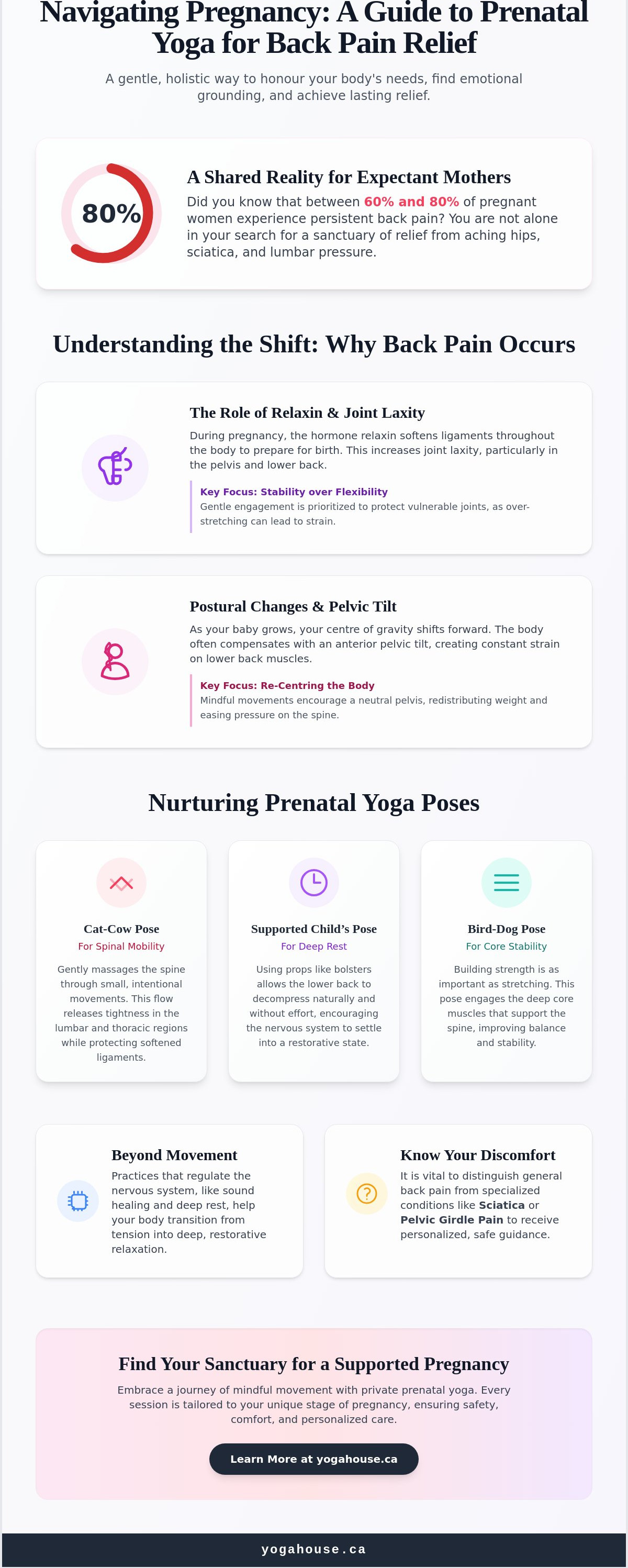
Did you know that between 60% and 80% of expectant mothers navigate the persistent discomfort of back pain during their pregnancy journey? It is a staggering number that reflects a shared reality; many women find themselves struggling with aching hips, sharp sciatica, and the heavy pressure of a changing body. If you feel overwhelmed by these physical shifts, you aren't alone in your search for a sanctuary of relief. Practising prenatal yoga for back pain offers more than just a simple stretch; it provides a gentle, holistic way to honour your body's needs while calming the nervous system.
You likely realize that true comfort requires more than a temporary fix for your lumbar pressure. You deserve to move through your days with a sense of lightness and to rest deeply at night without the distraction of physical strain. This guide explores how a nurturing approach to mindful movement can help you find emotional grounding, improved mobility, and lasting relief. We will look at how intentional practices can soothe your aches, stabilize your foundation, and prepare your spirit for the beautiful transitions ahead.
Key Takeaways
- Learn how the hormone relaxin and a shifting centre of gravity impact your joint stability and create pressure on the lumbar spine.
- Discover how to practise prenatal yoga for back pain using grounding poses and supportive props to create a sense of weightlessness and ease.
- Understand the vital differences between general lower back discomfort and specialized conditions like sciatica or Pelvic Girdle Pain.
- Explore how nervous system regulation and sound healing can help your body transition from a state of tension into deep, restorative relaxation.
- Realize the safety and comfort of a private sanctuary where personalized guidance ensures every movement is tailored to your unique stage of pregnancy.
Understanding the Shift: Why Back Pain Occurs During Pregnancy
As your body prepares for the arrival of new life, it undergoes a profound metamorphosis. This transition is beautiful, yet it often carries a physical and emotional weight that requires us to honour our changing needs. You might find that your lower back aches after a short walk or that your hips feel unusually tender at the end of the day. It's essential to validate these feelings; your discomfort isn't just a symptom, but a signal from a body working incredibly hard. When we explore the benefits of prenatal yoga for back pain, we move away from the idea of "fixing" a problem. Instead, we embrace the concept of nurturing the spine, creating a sanctuary of support and stability during this sacred time.
The Role of Relaxin and Joint Laxity
Your body is incredibly wise, and during pregnancy, it releases a hormone called relaxin to help you prepare for birth. Its primary purpose is to soften the ligaments in the pelvis, but its effects are felt throughout your entire skeletal structure. This increased joint laxity can lead to a feeling of instability or "looseness" in your hips and lower back. While it's tempting to seek deep, intense stretches to find relief, over-stretching can actually be a risk. Without proper guidance, you might strain ligaments that are already softened by hormones. This is why exercise during pregnancy must be approached with intention, focusing on stability and strength rather than just flexibility. We prioritize gentle engagement to protect these vulnerable spaces.
Postural Changes and Pelvic Tilt
As your baby grows, your centre of gravity naturally shifts forward and slightly upward. To keep you balanced, your body often adopts an anterior pelvic tilt, where the pelvis tips forward and the tailbone reaches back. This change puts a constant, tiring strain on the erector spinae muscles, which are the long muscles running alongside your spine. They work tirelessly to keep you upright, often leading to fatigue and sharp discomfort in the lumbar region. Through the practice of prenatal yoga for back pain, we focus on re-centring the body. We use mindful movements to encourage a neutral pelvis, which helps redistribute your weight and take the pressure off your spine. It’s about finding a sense of internal balance that allows you to move with more ease and less strain throughout your day.
5 Nurturing Prenatal Yoga Poses for Back Pain Relief
Finding a sense of ease in your body doesn't require complex or strenuous movements. When we practice prenatal yoga for back pain, we choose poses that offer a sanctuary for your spine and hips, allowing you to organize your physical energy toward restoration. A randomized controlled pilot study has shown that this mindful approach to movement can significantly improve the quality of life for expectant mothers. By using soft bolsters and sturdy blocks, we create a supportive environment where your muscles can finally let go of their protective tension.
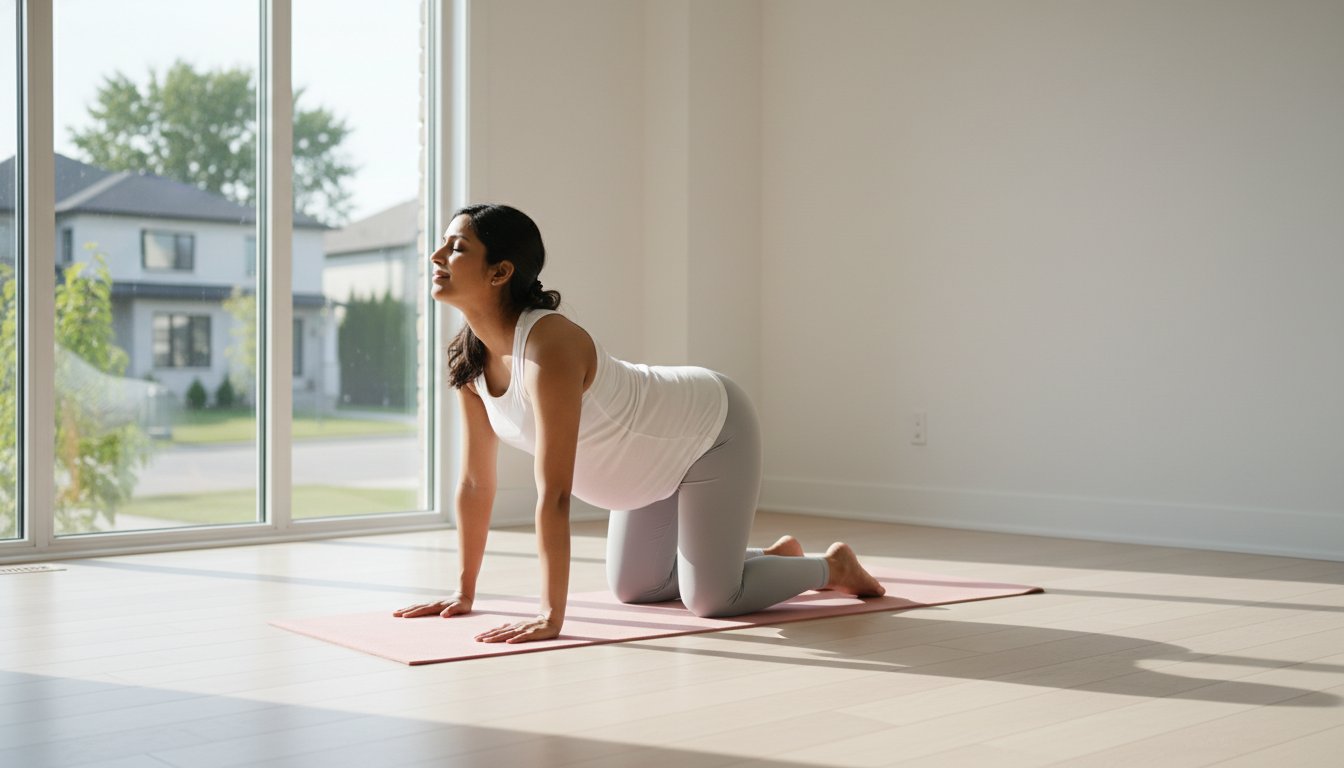
Cat-Cow (Marjaryasana-Bitilasana) for Spinal Mobility
This gentle flow helps you reconnect with the natural rhythm of your breath while massaging the length of your spine. Start on your hands and knees, ensuring your wrists are under your shoulders and knees are under your hips. As you inhale, soften your belly and lift your heart; as you exhale, gently round your back toward the ceiling. It is vital to keep these movements small and intentional. By avoiding a deep over-arch in the lower back, you protect your ligaments while releasing tightness in the lumbar and thoracic regions.
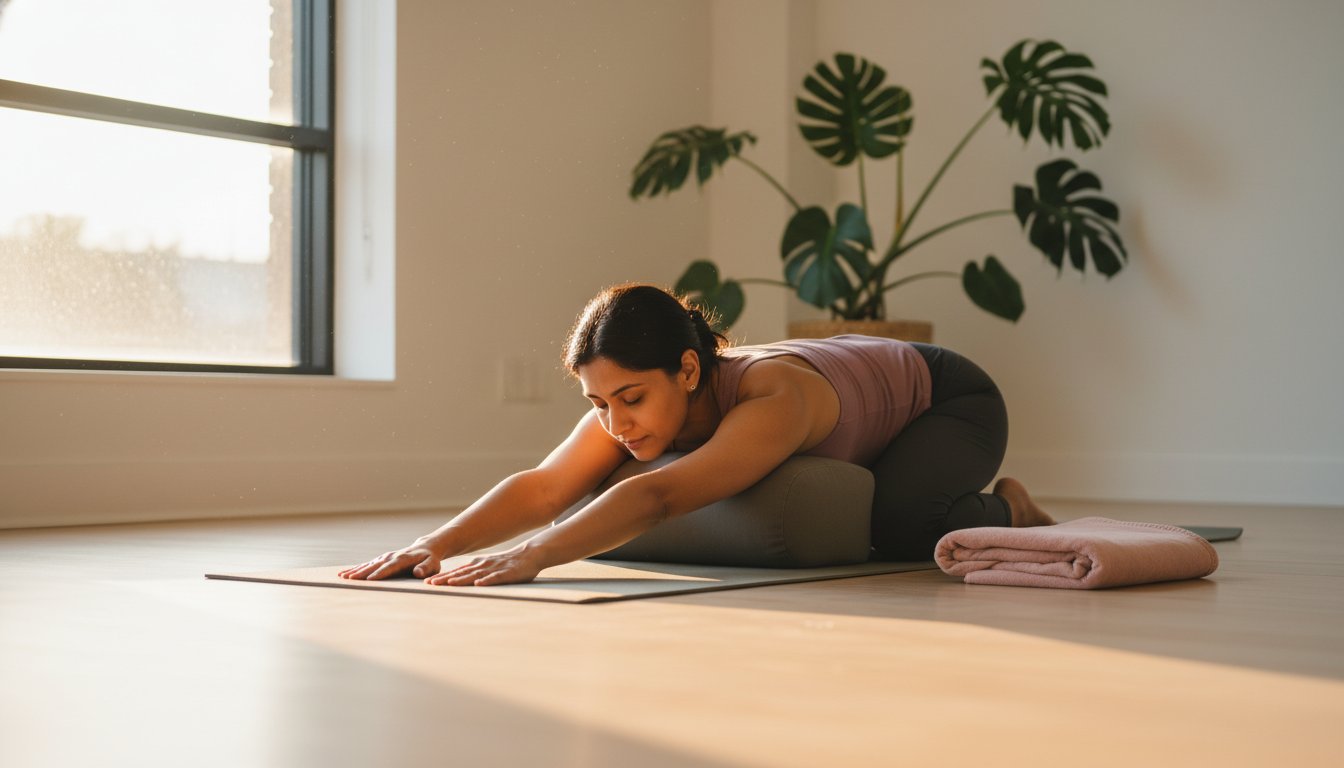
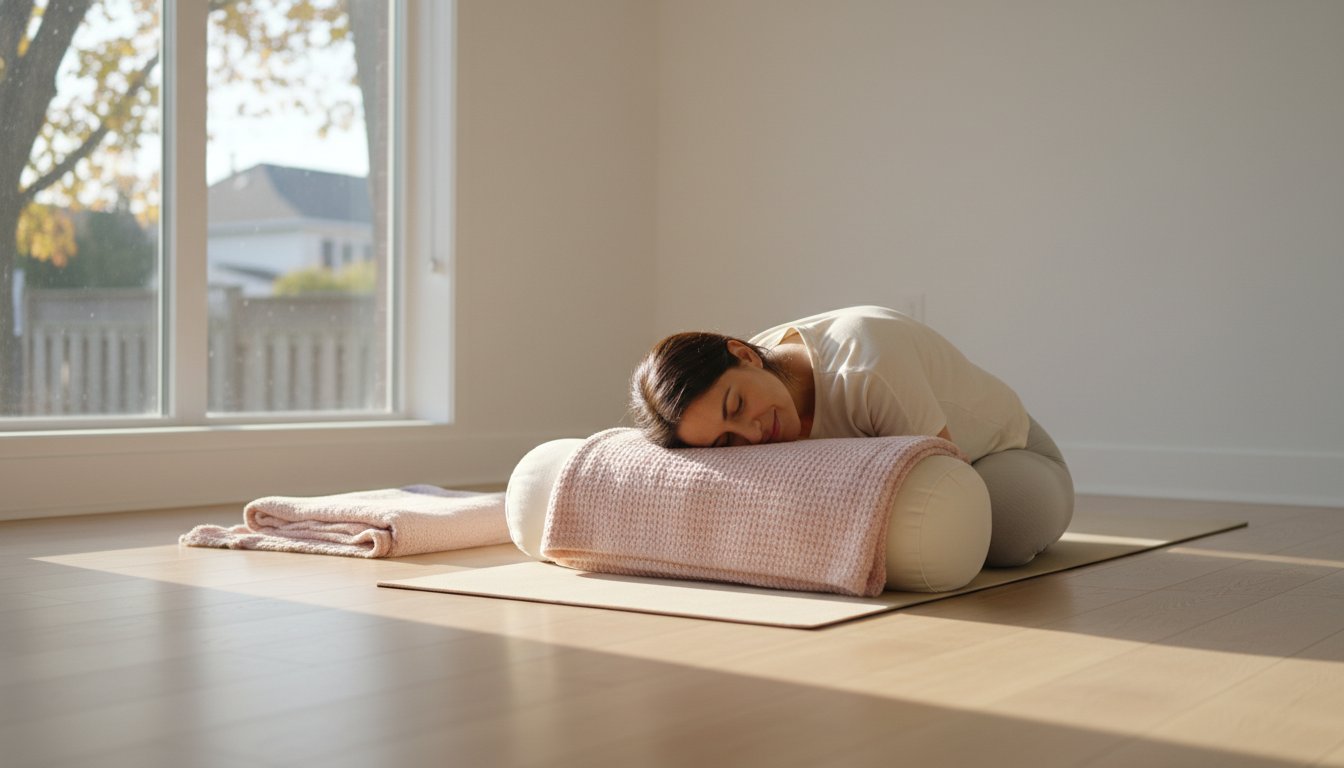
Supported Child’s Pose (Balasana) for Deep Rest
Rest is a productive part of your practice. To find this pose, widen your knees to create a comfortable space for your growing baby and place a bolster or a stack of firm pillows lengthwise between your thighs. Rest your chest and one cheek on the support, letting your arms drape softly to the sides. This position allows the lower back to decompress naturally without any effort on your part. It shifts the body out of a state of high alert and encourages the nervous system to settle into deep, restorative quietude.
Bird-Dog (Parsva Balasana) for Core Stability
Building stability is just as helpful as finding a stretch. From a tabletop position, slowly extend one leg behind you while reaching the opposite arm forward. If your balance feels unsteady, keep your toes tucked and slide your foot along the floor instead of lifting it. This movement engages the deep core muscles that wrap around your torso like a supportive corset. By strengthening these stabilizers, you provide your spine with the internal scaffolding it needs to carry your weight with more grace and less ache.
Standing Pelvic Tilts for Re-Centring
You can find relief even when you aren't on a yoga mat. Stand with your back against a wall, keeping your feet about a foot away from the baseboard. Gently press the small of your back into the wall by engaging your lower abdominals, then release. This subtle rocking motion helps neutralize an exaggerated anterior pelvic tilt. It teaches your body how to find its centre again, reducing the constant tugging sensation on your lower back muscles.
Wall-Supported Squat (Malasana) for Hip Release
Hips and back pain are often deeply connected. Lean your back against a wall and slowly walk your feet out, lowering your hips into a shallow squat. You may find it helpful to place a block under your sit bones for added security. This pose encourages the pelvic floor to soften and the lower back to broaden. If you feel unsure about your alignment or safety during these movements, exploring them within a private yoga session can provide the personalized reassurance and comfort you deserve.
Targeting Sciatica and Pelvic Girdle Pain
Understanding the specific source of your discomfort is the first step toward finding true peace. Not all sensations in the lower body are created equal, and distinguishing between a muscular ache and nerve-related tension allows us to move with greater wisdom. Sciatica, for instance, occurs when the sciatic nerve is compressed by the baby's position or a tight piriformis muscle. This often results in a sharp, radiating sensation that travels from the lower back through the glutes and down the leg. This is quite different from Pelvic Girdle Pain (PGP), which is frequently felt as a deep instability or ache at the front or back of the pelvis. When we practice prenatal yoga for back pain, we must be careful not to aggravate these sensitive areas. If you're experiencing sharp nerve pain, you should avoid deep seated forward folds or aggressive hamstring stretches, as these can pull on the nerve and increase inflammation. To ensure your practice remains a sanctuary of safety, you can review our guide on prenatal yoga poses to avoid.
Gentle Hip Openers for Sciatic Relief
To soothe the sciatic nerve, we focus on the piriformis muscle, a small but powerful muscle in the glute area that can pinch the nerve when it becomes tight. A modified Pigeon pose, performed while seated on a chair or supported by a bolster, offers a gentle way to encourage release without the intensity of a floor-based stretch. In this variation, we prioritize even weight distribution across both sit bones. This balance ensures that we aren't putting unnecessary pressure on one side of the pelvis, allowing the body to organize itself into a state of quiet relief. It's about creating space for the nerve to breathe while keeping the hips level and supported.
Managing Pelvic Girdle Pain (PGP)
PGP requires a different, more stabilizing approach than general back pain. Because this condition is rooted in joint laxity and instability, asymmetrical poses that move the legs in opposite directions, such as Triangle or wide-legged lunges, can sometimes aggravate the discomfort. Instead, we embrace a "less is more" philosophy. Keeping your knees together when rolling over in bed or moving through your daily transitions can prevent the pelvic joints from shearing. In your yoga practice, focus on grounding and stability rather than seeking the furthest edge of a stretch. This protective approach helps maintain the integrity of your frame, providing the comfort you deserve during this transition. We realize that stability is often the most nurturing gift you can give your body right now.
Beyond Movement: Regulating the Nervous System
When physical discomfort becomes a constant companion, your body may unknowingly slip into a state of "fight or flight." This heightened nervous system response can cause muscles to tighten further, creating a cycle where stress and pain reinforce one another. True relief through prenatal yoga for back pain involves more than just adjusting your posture; it requires us to soothe the internal environment. By integrating meditation and intentional stillness, we can shift how the brain perceives physical sensations. This transition allows you to move from a place of overwhelm to a space of quiet observation, where you can acknowledge the ache without letting it define your entire experience.
A nurturing practice recognizes that your emotional well-being is inseparable from your physical comfort. When we address the nervous system, we are essentially giving the body permission to let go of its protective guarding. This process is essential for long-term relief, especially as your body continues to change. It is a way of honouring the incredible labour your body is already doing. To find your own rhythm of rest and relief, we invite you to book a private yoga session tailored to your unique journey.
Sound Healing for Pain Management
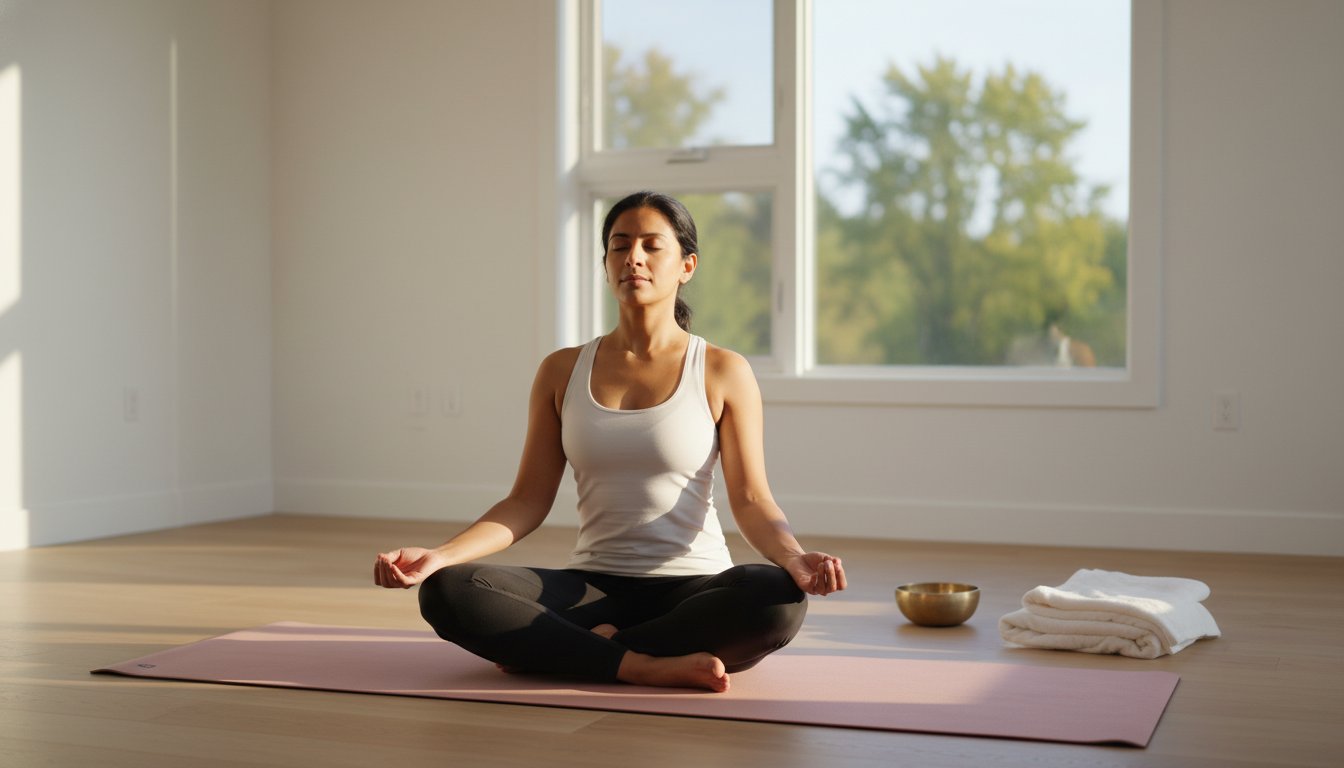
Sound healing serves as a powerful tool for deep cellular relaxation that complements your physical movements. The gentle, resonant vibrations from crystal bowls move through the body, helping to lower cortisol levels and encourage a profound sense of peace. You might find it interesting to realize there is a direct physiological connection between a relaxed jaw and a relaxed pelvic floor. Softening the mouth and face naturally invites the lower body to let go of tension. Creating this sensory sanctuary allows your body to prioritize restoration over protection. If you wish to experience this restorative practice, you can learn more about sound healing in Vaughan and how it supports maternal wellness.
Mindful Breathing (Pranayama)
Mindful breathing, or Pranayama, acts as an internal support system for your spine. We often teach the "Golden Thread" breath, where you imagine exhaling a thin, shimmering thread of air through softly parted lips. This technique is particularly helpful during pain flares as it signals the brain to remain calm and grounded. Deep diaphragmatic breathing also supports the lower back from the inside out by gently engaging the transverse abdominis, which acts as a natural corset for the torso. These practices do more than just manage current aches. They provide you with the essential tools needed for the physical demands of labour, ensuring you feel prepared and empowered.
Finding Your Sanctuary: Private Prenatal Yoga in Vaughan
Choosing a private environment for your prenatal yoga for back pain practice allows you to step away from the noise of the world and into a space designed specifically for your well-being. While large, public classes can feel high-energy or even clinical, a private sanctuary offers the emotional safety and personal connection you deserve during this transition. At Yoga House Canada, we have created a co-ed-free environment where the atmosphere is intentionally calm, restorative, and unhurried. We realize that self-care is not a luxury; it is a vital part of preparing your body and spirit for the journey of motherhood. By prioritizing your comfort, you are honouring both yourself and your baby in a way that feels deeply supportive and grounded.
Why Private Sessions Matter for Back Pain
Every pregnancy follows a unique rhythm, and your experience with physical discomfort is deeply personal. In a one-on-one setting, we have the time and space to modify every movement based on your specific trimester, anatomy, and history with back issues. Unlike a general class where instructions are broad, a private session allows us to focus entirely on the areas where you feel the most pressure. We can adjust the height of a block or the placement of a bolster until you find that exact point of release. This direct focus ensures that you aren't just following a routine, but are engaging in a practice that is tailored to your body's current needs. It provides a safe space to ask questions, express concerns, and move at a pace that feels natural to you, without ever feeling rushed or overlooked.
Your Local Sanctuary in Vaughan and Woodbridge
For residents seeking prenatal yoga in Woodbridge ON, our studio serves as a convenient yet secluded escape from the demands of daily life. We understand that some women prefer to share this restorative journey with a close friend or family member, which is why we also offer semi-private sessions. These small, intimate gatherings maintain the high standard of personalized care while allowing for a shared sense of connection. Whether you are just beginning your prenatal yoga first trimester journey or are looking for relief in your final weeks, we invite you to find your centre here. By taking this meaningful pause, you are building the physical stability and emotional resilience needed for the beautiful cycles ahead. We are here to guide you toward a state of ease, ensuring that your path to motherhood is paved with comfort and peace.
Embracing a Path of Ease and Balance
You have explored how physiological shifts like relaxin and a changing centre of gravity impact your daily comfort. By choosing specific, grounded poses and learning to distinguish between types of pelvic pain, you can move with more wisdom and confidence. Practising prenatal yoga for back pain is a journey that extends far beyond the physical mat; it's an invitation to settle your nervous system and find deep quietude within your own body. This transition is a sacred cycle that deserves to be met with patience and specialized care.
At Yoga House Canada, our intimate, co-ed-free private sanctuary in Vaughan is dedicated to women's health and prenatal wellness. We integrate sound healing and nervous system regulation to help you move from a state of physical tension to one of profound ease. Begin your journey to relief with a private prenatal session at Yoga House Canada. You're doing the beautiful, selfless work of bringing new life into the world, and it's our honour to support you as you find your way back to a place of comfort and peace.
Frequently Asked Questions
Is prenatal yoga safe for back pain in the third trimester?
Yes, prenatal yoga is safe and deeply beneficial during the third trimester. At this stage, we focus on poses that don't involve lying flat on your back, as this can compress the vena cava. Instead, we use bolsters and blocks to keep the heart elevated. This approach helps manage the increased weight on your lumbar spine while encouraging the baby into an optimal position for birth.
Can yoga help with sharp sciatica pain during pregnancy?
Gentle yoga can certainly help alleviate the sharp sensations of sciatica. By mindfully releasing the piriformis muscle and creating space in the hips, you can reduce the pressure on the sciatic nerve. It's essential to avoid aggressive stretching that might pull on the nerve. Instead, we use soft, supported movements that encourage the muscles to let go of their protective grip without causing further inflammation.
How often should I practice prenatal yoga to see relief in my back?
You will often feel the most significant relief by practising prenatal yoga for back pain two to three times a week. Consistency matters more than the length of each session. Even a short, fifteen-minute daily practice of grounding poses can help maintain spinal alignment and prevent tension from building up. It's about creating a steady rhythm of movement that supports your body as it transitions through each week.
What is the difference between general yoga and prenatal yoga for back pain?
General yoga often includes deep twists, intense abdominal work, and lying flat, all of which are avoided in prenatal yoga. A specialized prenatal practice focuses on the unique physiological changes of pregnancy, such as joint laxity and a shifting centre of gravity. We prioritize stability and pelvic safety, ensuring that every movement honours the space your baby needs while protecting your softened ligaments from over-stretching.
Do I need special equipment to start prenatal yoga at home?
You don't need specialized equipment to begin finding relief at home. While yoga blocks and bolsters provide excellent support, you can easily substitute them with firm cushions, rolled-up blankets, or even a sturdy chair. The goal is to create a sense of weightlessness and ease. Using these everyday items allows you to organize your body into comfortable positions that take the pressure off your aching lower back.
Can prenatal yoga help prevent back pain before it starts?
Yes, starting a practice early can be a wonderful way to prevent discomfort before it begins. By strengthening the deep core and stabilizing the muscles around the pelvis, you prepare your body for the weight shifts of later trimesters. This proactive approach helps you maintain a neutral pelvic tilt, which reduces the likelihood of the chronic strain that often leads to lumbar pressure and aching hips.
Is it safe to do yoga if I have Pelvic Girdle Pain (PGP)?
It is safe to practice with Pelvic Girdle Pain, provided you focus on stabilizing movements rather than deep hip openers. You should avoid poses where your legs move far apart or in opposite directions. Keeping your movements symmetrical and your knees closer together helps maintain the integrity of the pelvic joints. This careful, intentional approach ensures you find relief without aggravating the sensitive ligaments of the pubic symphysis.
What should I do if a yoga pose makes my back pain feel worse?
If a pose causes an increase in discomfort, you should stop immediately and transition into a resting position like a supported Child's Pose. Pain is your body's way of asking for a change. It's a signal to modify the movement or skip it entirely for the day. In a nurturing practice, we listen to these signals with kindness, realizing that what felt good yesterday might not be what your body needs today.