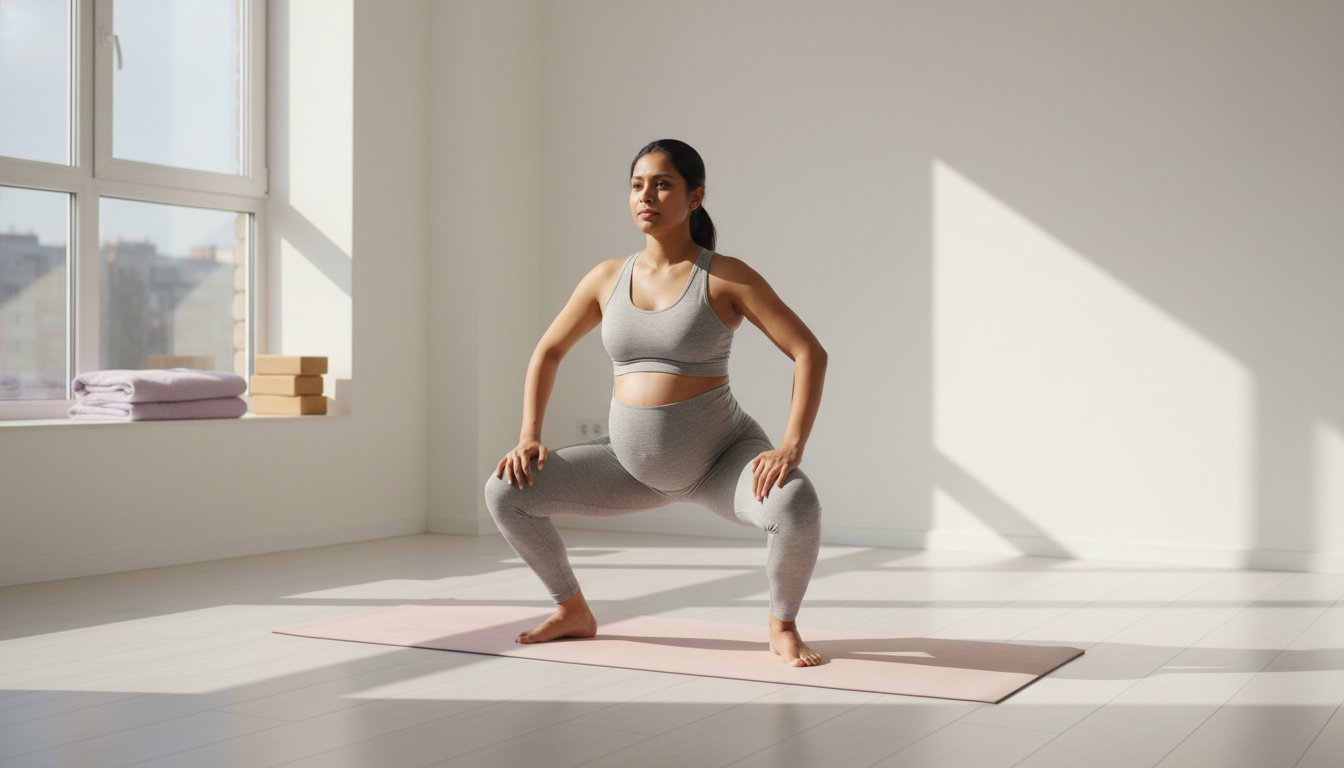
Imagine unrolling your mat in a quiet corner of your home, ready to connect with your breath, only to be stopped by a flicker of doubt about whether a deep twist or a certain stretch is truly safe for your baby. Because your body is navigating a profound season of change, it's essential to understand which prenatal yoga poses to avoid to ensure both your safety and your peace of mind. It's completely natural to feel protective during this transition, especially as your centre of gravity shifts, your joints soften, and your internal rhythm finds a new pace.
This guide is designed to offer you clarity, helping you protect your physical well-being (and that of your little one) so you can move with complete confidence. We'll walk through a gentle checklist of movements to pause, explain the physiological reasons behind these adjustments (such as the ACOG recommendation to avoid lying on your back after the first trimester), and share nurturing modifications that bring genuine relief to your pregnancy aches. By honouring your body's needs, you can transform your time on the mat into a sanctuary of stability, peace, and internal balance.
Key Takeaways
- Understand how hormonal changes like relaxin and a shifting centre of gravity require a more mindful, stable approach to your movement and balance.
- Identify exactly which prenatal yoga poses to avoid, such as belly-down postures and deep backbends, to prevent unnecessary pressure and protect your abdominal wall.
- Discover why maintaining a steady, unhurried breath and a cool body temperature is vital for your baby’s development and your own internal peace.
- Explore how to use props and wider stances to create space for your growing belly, ensuring your practice remains a restorative source of comfort.
- Realize the benefits of moving away from large group settings toward private prenatal yoga sessions that offer a tailored safety map for your unique journey.
Why Your Yoga Practice Must Evolve During Pregnancy
As you move through each trimester, your body becomes a vessel of constant, beautiful transformation. The practice that once served you, perhaps one focused on power or achieving peak poses, needs to soften to accommodate your new reality. It's time to prioritize your nervous system over the physical depth of a stretch. In this nurturing space, the old "no pain, no gain" mentality has no place. Instead, we listen to the subtle whispers of the body to stay safe and grounded. Your mat should be a sanctuary where you feel protected, not a place where you're pushing against your own boundaries.
Understanding the 'Relaxin' Factor
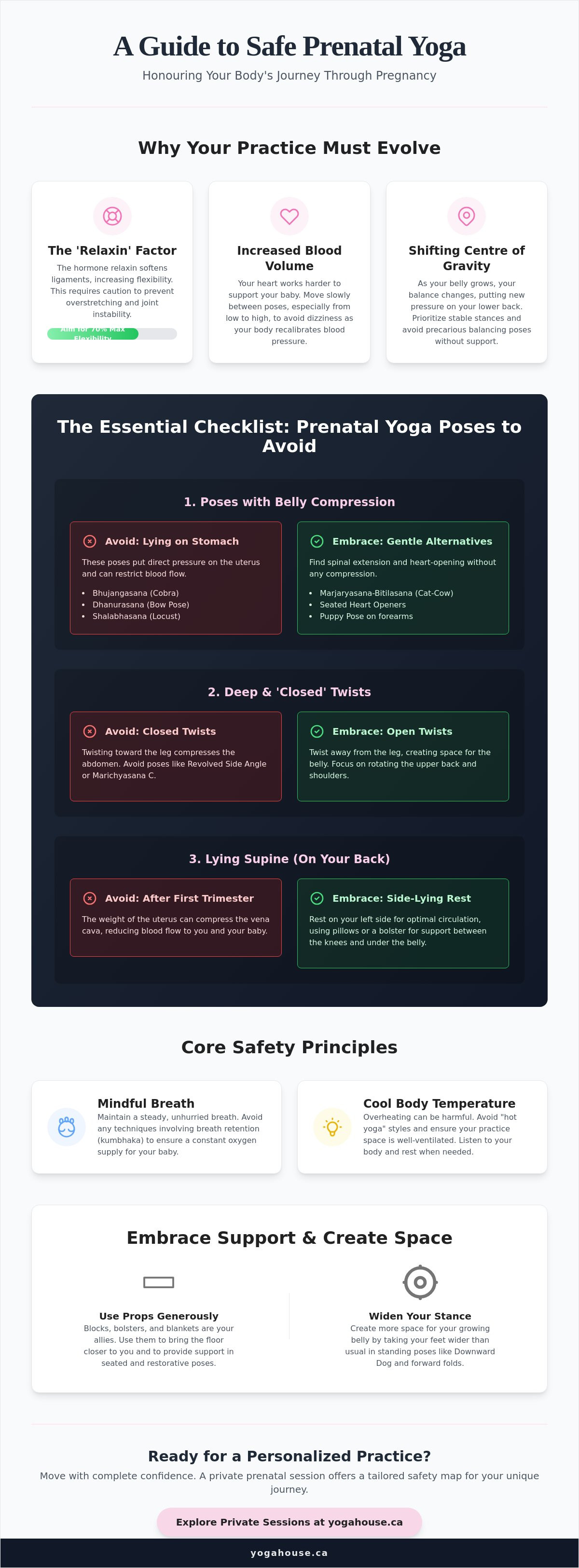
During pregnancy, your body releases a hormone called relaxin. Its primary purpose is to soften the ligaments in your pelvis to prepare for birth, but this hormone travels through your entire system, affecting every joint from your ankles to your neck. You might suddenly feel more flexible than ever before. While this might feel like progress, it's actually a signal to move with caution. Because your ligaments are softer, they can't support your joints as effectively as they normally do. This is a primary reason why yoga for women in pregnancy focuses on stability rather than deep stretching. A helpful guide is to stay at about 70% of your maximum flexibility. If you push to your edge, you risk long-term joint instability or injury.
Blood Volume and Circulation Changes
By the second trimester, your blood volume increases significantly to support your growing baby. This shift puts extra demand on your heart and lungs. You'll likely notice your heart rate climbs faster and your breath becomes shorter, even during simple movements. This physiological shift is why we move away from athletic styles toward restorative movement. It's also why sudden changes in elevation, such as moving quickly from a forward fold to standing, can cause dizziness or fainting. Your body needs time to recalibrate its blood pressure as you move through space. Taking a meaningful pause between transitions ensures your heart and baby stay at a comfortable rhythm.
As your belly grows, your centre of gravity shifts forward. This changes how you balance and puts new pressure on your lower back. Because of these internal and external shifts, knowing which prenatal yoga poses to avoid becomes a vital part of your self-care. It isn't about limitation. It's about creating a practice that respects your current rhythm and protects your health. When you choose a sanctuary-style practice, you're choosing to honour the sacred work your body is already doing. By adapting your movements, you find a state of ease that supports both you and your baby throughout the journey.
The Essential Checklist: Prenatal Yoga Poses to Avoid
Navigating your practice requires a shift from external achievement to internal listening. While yoga offers profound benefits, certain movements can place undue stress on your changing anatomy. Understanding which prenatal yoga poses to avoid is not about fear; it's about creating a safe, supportive environment for your baby to grow. This checklist serves as a gentle guide to help you refine your movements while honouring your body's wisdom. By making these small adjustments, you ensure your time on the mat remains a restorative experience rather than a source of strain.
Poses That Compress the Midsection
As your pregnancy progresses, the space within your abdomen becomes increasingly sacred. Poses that require you to lie flat on your belly, such as Bhujangasana (Cobra), Dhanurasana (Bow), and Shalabhasana (Locust), should be removed from your flow. These positions put direct pressure on the uterus and the placenta, which can be both uncomfortable and restrictive. Instead of these belly-down postures, consider gentle spinal extensions from a tabletop position or a seated heart-opener. These alternatives allow you to find length and expansion without compressing your midsection. If you are ever unsure about a specific sequence, consulting a comprehensive guide for yoga teachers can provide deeper insight into the physiological "why" behind these safety measures.
The Danger of 'Closed' Twists vs. 'Open' Twists
Twisting is a wonderful way to maintain spinal mobility, but the way you rotate matters deeply. A "closed" twist occurs when you turn toward your bent leg, such as in a Revolved Side Angle or a seated Marichyasana. This movement compresses the belly and can restrict blood flow to the pelvic region. In a private prenatal yoga session, we focus instead on "open" twists. This means always twisting away from the bent leg, ensuring your torso moves into open space. By visualizing yourself making room for your baby with every rotation, you maintain your range of motion while keeping the abdominal area soft and unrestricted.
Beyond compression, we must also consider the abdominal wall and the vena cava. Traditional abdominal work, like Boat pose (Navasana) or crunches, can exacerbate diastasis recti, the separation of the abdominal muscles. Similarly, after approximately 20 weeks, lying flat on your back for extended periods can lead to Supine Hypotensive Syndrome. This happens when the weight of the uterus presses on the inferior vena cava, potentially causing dizziness or reduced blood flow. Because of these risks, many practitioners find that identifying prenatal yoga poses to avoid is the first step toward a more intuitive, restorative practice. Transitioning to a side-lying position or using a bolster for a semi-reclined rest ensures your nervous system remains calm and your circulation stays fluid. Choosing these mindful adjustments allows your practice to remain a true sanctuary of health and peace.
Breath and Temperature: Physiological Boundaries for Safety
In the quiet space of your practice, safety extends beyond the physical shape of a pose. It reaches into the very air you breathe and the warmth of your skin. While identifying physical prenatal yoga poses to avoid is a vital step, understanding your physiological boundaries is equally important for a truly nurturing experience. Your baby relies on your internal environment to remain stable and cool. By honouring these invisible boundaries, you create a sanctuary where both you and your little one can flourish without the stress of over-exertion.
The 'Golden Thread' Breath
Breath is the life force that connects you to your baby. In a traditional practice, you might have explored Kumbhaka, or breath retention, but this is a technique to pause during pregnancy. Holding your breath, even for a few seconds, can momentarily restrict the steady flow of oxygen to the placenta. Similarly, forceful techniques like 'Breath of Fire' or intense abdominal pumping should be set aside. Instead, we invite the 'Golden Thread' breath, a slow, continuous exhalation through softly parted lips. This fluid rhythm keeps your nervous system grounded and ensures a constant supply of oxygen. If you find yourself gasping or unable to talk, it's a clear signal from your body to soften your effort and return to a restorative pace.
Temperature Regulation and the Mother
Maintaining a stable core temperature is essential for healthy fetal development. The Canadian Society for Exercise Physiology recommends that pregnant women avoid exercising in excessive heat or high humidity to prevent hyperthermia. For this reason, hot yoga is generally considered one of the prenatal yoga poses to avoid in its entirety. In our sanctuary, we maintain a comfortable, temperate environment that allows your body to release heat naturally. Overheating can lead to dizziness, nausea, or a rapid heart rate, which disrupts the peaceful connection you're building with your baby. Staying hydrated and practicing in a well-ventilated space helps you maintain internal balance.
This need for stability also applies to the speed of your movement. A fast-paced Vinyasa flow can be tempting, but moving too quickly through transitions increases the risk of injury. Because relaxin has softened your joints, your body requires more time to find its centre in every pose. Choosing to stay grounded rather than practicing advanced inversions also supports your nervous system. When you keep your feet on the earth, you reduce the risk of falls and avoid the sudden shifts in blood pressure that can lead to lightheadedness. This unhurried approach allows you to feel every nuance of your journey with clarity and ease.
Nurturing Modifications: How to Stay Active Safely
Movement during pregnancy is a gentle conversation between you and your baby. While we have already explored the specific prenatal yoga poses to avoid, the focus now shifts toward what you can embrace. Modifying your practice isn't about doing less; it's about doing things differently to honour your body's new architecture. By using props and adjusting your stance, you create a supportive environment that allows for strength and flexibility without the risk of strain. This intentional approach ensures that your time on the mat remains a sanctuary of comfort throughout every trimester.
The Power of Props in Vaughan
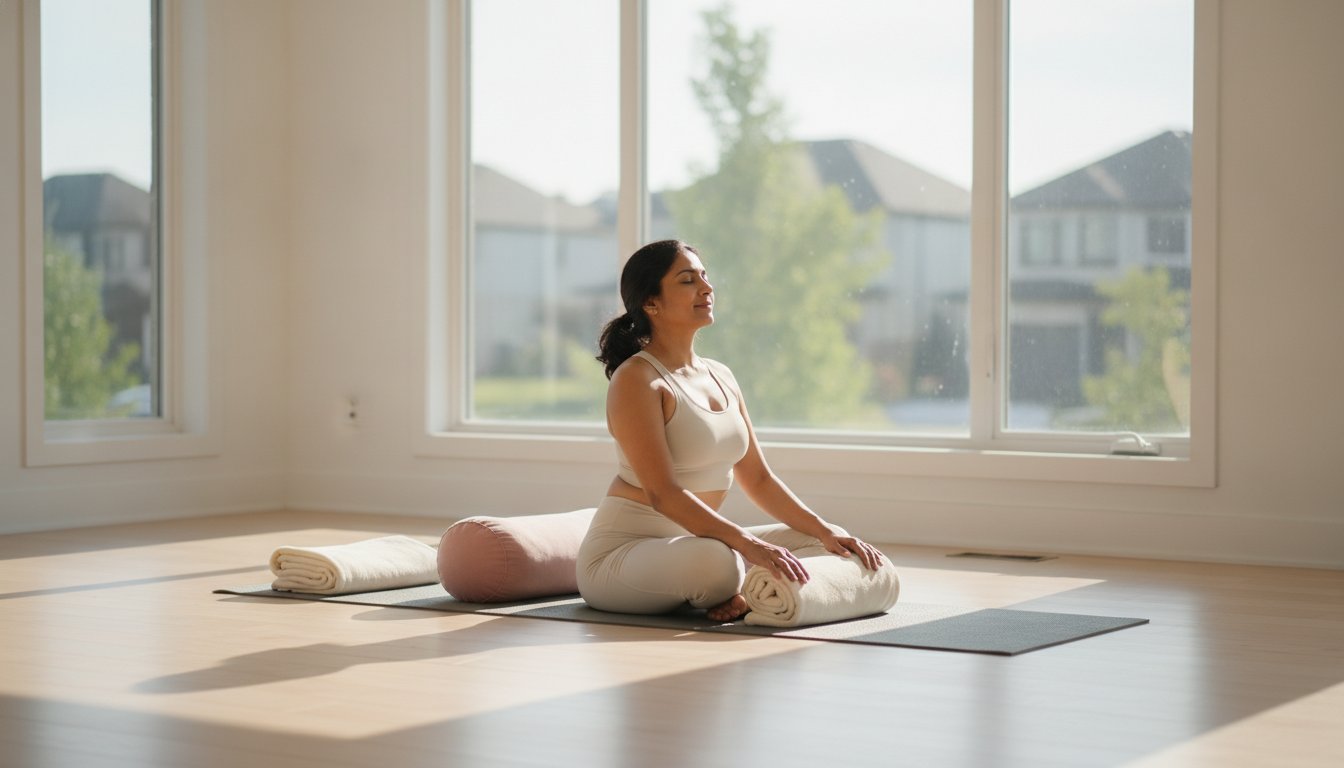
In our local sanctuary, we view props as essential partners rather than mere accessories. Using bolsters, blocks, and straps allows you to "bring the floor to you," which is vital as your centre of gravity shifts. For example, instead of resting flat on your back, which we've identified as a position to pause after 20 weeks, you can enjoy a side-lying Savasana. By placing a bolster between your knees and another under your head, you maintain neutral spinal alignment and optimal circulation. Elevating the chest with blocks during restorative poses also helps prevent heartburn and creates more room for deep, diaphragmatic breathing. For those just starting this journey, our guide on Prenatal Yoga First Trimester: A Nurturing Guide to Safe Movement offers a beautiful foundation for these early adjustments.
Modifying Transitions (The 'In-Between' Moments)
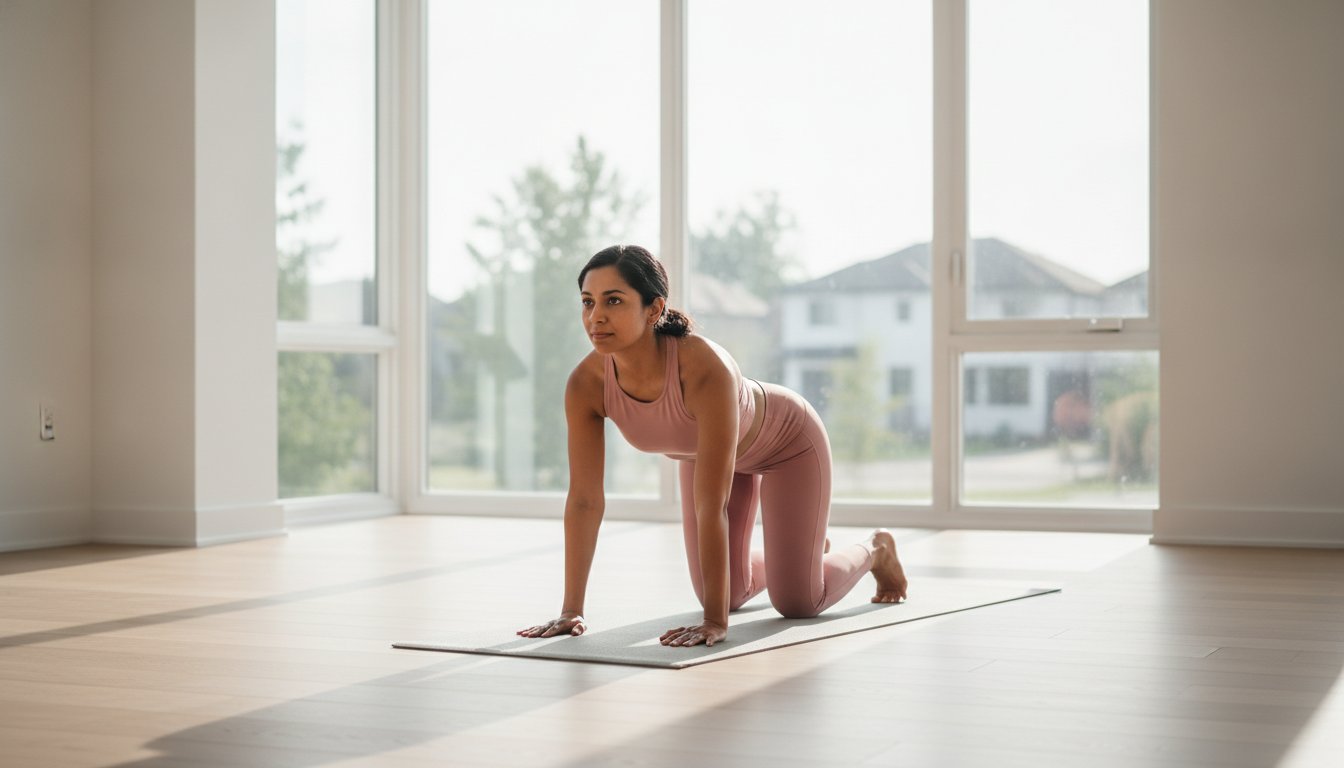
The transitions between poses are often where the most care is needed. To protect the pelvic floor and maintain stability, we replace jumping or hopping with slow, wide-legged steps. Instead of moving through a traditional Vinyasa, try transitioning through "All Fours" or a gentle tabletop position. This protects the abdominal wall and keeps the pressure off your lower back. We also encourage taking a "meaningful pause" between sequences. This moment of quietude allows you to check in with your heart rate and ensure you aren't over-exerting yourself. If balance feels fleeting, the wall becomes a steadfast ally. Practising Tree pose or Warrior III with wall support provides the stability your softening ligaments need, allowing you to build strength without the fear of a fall.
When physical movement feels too demanding, your practice can evolve into the subtle realms of sound and meditation. Integrating gentle humming or focused visualizations can regulate your nervous system just as effectively as a physical asana. These tools are especially helpful when you need to navigate the emotional transitions of pregnancy. If you're looking for a personalized way to adapt your practice to your unique needs, we invite you to book a private prenatal yoga session. Having a dedicated guide ensures that every movement is tailored to your body, giving you the confidence to move with grace and ease.
Personalized Support: Why a Private Sanctuary Matters
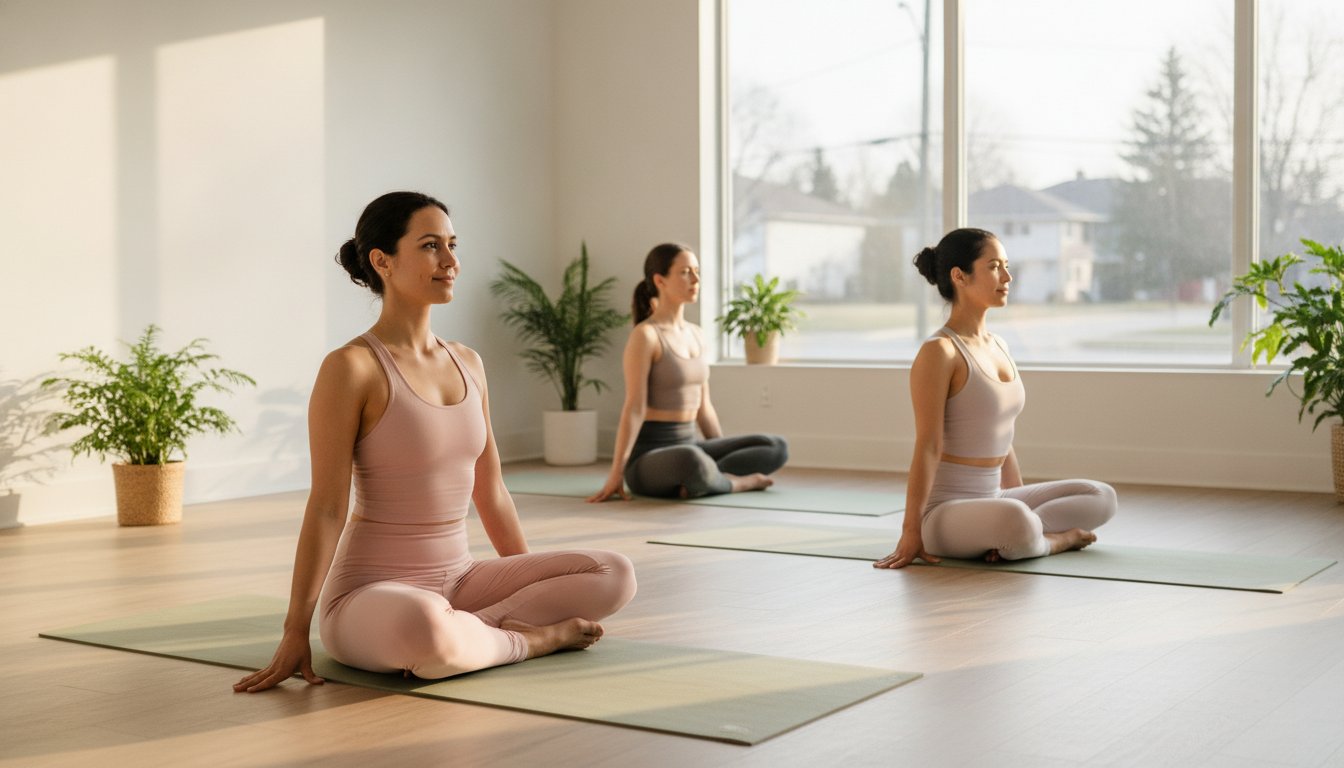
While knowing which physical movements to pause is the foundation of a safe practice, the environment in which you move is just as important. A public studio with dozens of students often lacks the quietude and individual attention your changing body deserves. In a crowded room, it's difficult for an instructor to ensure every student is correctly modifying the prenatal yoga poses to avoid that we've discussed. Choosing a private sanctuary instead allows you to receive the focused care of a nurturing specialist who understands your unique physical transitions and your need for emotional safety.
Intimate Instruction vs. Group Classes
The "one-size-fits-all" approach of general fitness classes can be risky when your ligaments are softening and your centre of gravity is in flux. In a private setting, your guide can physically adjust your props to ensure your joints are perfectly supported. This level of intimacy creates a safety map tailored specifically to your stage of pregnancy. It transforms your practice from a standard workout into a restorative ritual where your peace of mind is prioritized as much as your physical alignment. You're never just another person in a row; you're a mother who deserves a tailored experience.
A Holistic Approach to Motherhood
True wellness during this transition involves more than just asana. Integrating sound healing and meditation into your routine helps lower cortisol levels, creating a peaceful internal environment that benefits both you and your baby. These sessions offer a meaningful pause to focus on rhythmic breathing and pelvic floor awareness, both of which are invaluable as you prepare for labour. By moving away from the noise of public classes, you find the space to truly listen to your intuition and bond with your little one. This holistic focus ensures you're preparing your mind and spirit for the journey ahead, not just your body.
Your journey into motherhood is a sacred cycle that deserves a dedicated space for reflection and growth. We invite you to experience a gentle, personalized Prenatal Yoga Session in Vaughan designed for your safety and peace of mind. Whether you're navigating physical discomfort or seeking emotional grounding, having a trusted guide ensures you can move through your pregnancy with total confidence. By focusing on stability and restorative health, you can enjoy all the benefits of yoga while feeling completely protected, seen, and nurtured.
Honouring Your Body's Sacred Transition
Your journey into motherhood is a profound cycle of change that requires a gentle, intentional approach to movement. By understanding the specific prenatal yoga poses to avoid, such as those that compress the midsection or strain your softening ligaments, you create a safe space for your baby to thrive. Shifting your focus from physical depth to nervous system regulation ensures that your practice remains a true sanctuary. Whether you're using props to find ease or embracing the power of sound healing, every adjustment you make is an act of love and protection for both you and your little one.
You don't have to navigate these transitions alone. With our specialized women's health focus and expertise in nervous system regulation, we provide the intimate, private guidance your body needs. We invite you to Book Your Private Prenatal Sanctuary Session to receive personalized support in a serene, unhurried environment. These private and semi-private sessions allow us to tailor every movement to your unique rhythm, ensuring you feel grounded and confident. Trust in your intuition and the wisdom of your body as you move through this beautiful season of life with grace.
Frequently Asked Questions
Is it safe to do Downward Dog while pregnant?
Downward Dog is generally safe for most, but you should step your feet wider to create space for your growing belly. If you experience acid reflux or feel a rush of pressure in your head, it's best to shorten the time you spend in the pose or use a wall for support instead of the floor. This modification keeps your heart rate stable and your breath fluid.
Can I do twists if I'm only in my first trimester?
You can practice twists during the first trimester, provided they are open twists that move away from your leg. Even in the early stages, avoiding deep closed twists helps you establish the safe habits needed for later trimesters. This mindful approach ensures you don't compress the uterine space as your baby begins to grow, allowing for better circulation and internal ease.
What happens if I accidentally lie on my back for too long?
If you find yourself on your back after 20 weeks, you might feel dizzy or slightly nauseous due to the weight of the uterus pressing on the inferior vena cava. Don't worry if it happens briefly; simply roll onto your left side to restore optimal blood flow. This position is one of the primary prenatal yoga poses to avoid for extended periods during restorative rest.
Should I stop doing core exercises entirely during pregnancy?
You don't need to stop core work, but you should pivot away from traditional crunches or boat pose to prevent diastasis recti. Instead, focus on gentle engagement of the transverse abdominis and the pelvic floor. These subtle movements provide the stability your spine needs without placing excessive pressure on the abdominal wall, helping you feel strong and supported throughout your pregnancy.
Is it safe to start yoga if I've never practiced before I got pregnant?
It's absolutely safe to begin a yoga practice during pregnancy, provided you seek out specialized prenatal instruction. Starting with a private session ensures that your movements are tailored to your specific health history and trimester. This personalized approach allows you to build a foundation of strength and peace in a supportive environment, even if you've never stepped on a mat before.
How do I know if I'm overstretching my ligaments?
Because the hormone relaxin increases your flexibility, you might not feel the usual stretch sensation until you've gone too far. If you feel a sharp pinging sensation or notice lingering soreness in your joints after class, you've likely overextended. Aim for about 70% of your maximum range to keep your joints stable and protected as your body changes through each season.
Are inversions like headstands okay if they were already in my practice?
While you may have the strength for headstands, the risk of a fall or sudden changes in blood pressure makes them less ideal during this season. Your centre of gravity is constantly shifting, which can make your balance unpredictable. Staying grounded helps regulate your nervous system and keeps both you and your baby safe from accidental injury or excessive physical strain.
Can I attend a regular (non-prenatal) yoga class in Vaughan?
Attending a general class can be challenging because the pace and poses aren't designed for a pregnant body's needs. A teacher in a large group may not be able to provide the specific modifications for prenatal yoga poses to avoid that are essential for your safety. Choosing a private or semi-private sanctuary session ensures your practice is entirely focused on your well-being and comfort.