First-trimester yoga isn't just another fitness routine; it's a vital sanctuary for your nervous system during a time of profound internal transition. You might be feeling the heavy weight of exhaustion, the persistent waves of nausea, or perhaps a quiet anxiety about how to move your body safely during these first twelve weeks. It's natural to feel protective of your growing baby and uncertain about how prenatal yoga first trimester practices fit into your changing life. You aren't alone in seeking a space that prioritizes your emotional safety and physical well-being over athletic achievement.
This guide explores how gentle, restorative movement can offer you a path toward relief, helping you reclaim a sense of calm and confidence. We'll walk through the safest ways to honour your energy levels, manage early symptoms, and establish a restorative rhythm that stabilizes both your mind and body. By focusing on soft, intentional movements (and avoiding the heat or deep twists that aren't recommended right now), you can create a foundation of peace. You'll discover how to listen to your body's new language while building the internal strength needed for the journey ahead.
Key Takeaways
- Understand how to navigate the physical shifts of early pregnancy with confidence by exploring the essential safety guidelines for prenatal yoga first trimester practices.
- Discover why regulating your nervous system is vital for fetal development and how restorative movement helps you transition from a state of stress to a state of ease.
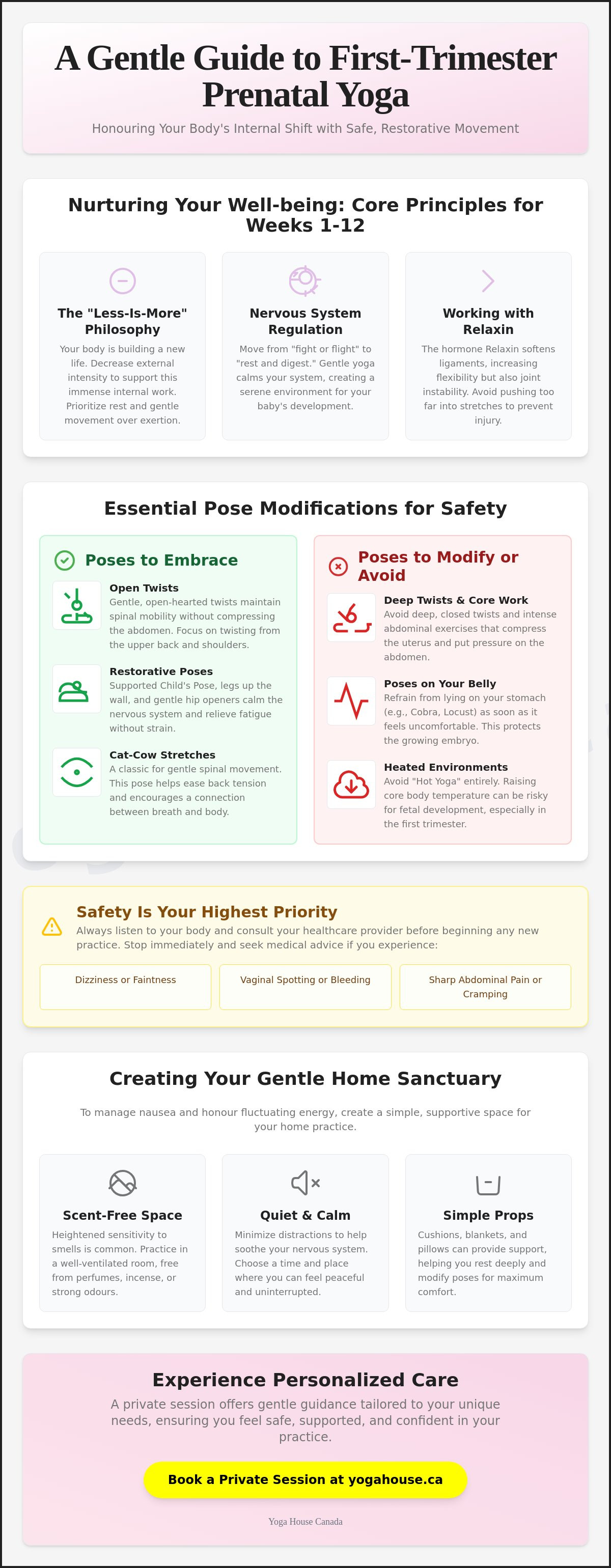
- Identify which common poses to avoid so you don't compress your abdomen while embracing open twists that maintain your spinal mobility.
- Learn how to organize a scent-free, quiet home sanctuary with simple props to manage nausea and honour your fluctuating energy levels.
- Experience the unique benefits of a private session, allowing you to receive personalized care and gentle guidance in a safe, intimate environment.
Is Prenatal Yoga Safe During the First Trimester?
Prenatal yoga is a specialized practice, a quiet sanctuary designed to honour the unique rhythms of the childbearing year. Unlike general fitness classes, it focuses on the emotional safety, physical stability, and internal transitions that define your journey. While the foundational principles of yoga remain rooted in the union of breath and movement, the application during these first twelve weeks requires a gentle, protective approach. For most healthy pregnancies, prenatal yoga first trimester practices are deeply beneficial, though we always recommend receiving clearance from your healthcare provider before you begin.
Your body is currently performing a silent, miraculous feat of architecture. It is building the placenta, expanding your blood volume, and nourishing a new life. This "invisible" work requires immense energy, which is why a "less-is-more" philosophy is so essential for your well-being. As your internal activity increases, your external intensity should naturally decrease. It's a time for restoration, quietude, and softening. By choosing a practice that respects this delicate phase, you create space for your body to do its most important work without the added stress of over-exertion.
Listening to Your Body’s Natural Rhythms
During these early weeks, your body begins producing Relaxin, a hormone that softens your ligaments and connective tissues. While this prepares you for birth, it can also lead to joint instability if you push too far into a stretch. Learning to distinguish between a healthy, grounding movement and over-exertion is a vital skill. Your intuition becomes a quiet, steady guide that tells you when to move and when to rest. Trust that your body knows how to protect itself; if a pose feels heavy, draining, or simply "off," it's an invitation to pause and breathe.
When to Pause or Modify Your Practice
Safety is our highest priority in this nurturing space. It's vital to recognize red flags such as dizziness, spotting, or sharp abdominal pain, which are signals to stop immediately and seek medical advice. We also advise against practicing in heated environments. "Hot yoga" can lead to maternal overheating, which is generally discouraged during pregnancy to protect fetal development. Some days, your prenatal yoga first trimester practice might simply be a moment of seated breathing, a gentle neck stretch, or a restorative rest. Adjusting your expectations allows you to remain present with your body without judgment or pressure.
Honouring the Internal Shift: Why Nervous System Regulation Matters
The first twelve weeks of pregnancy are often described as an invisible marathon. While your physical appearance hasn't changed yet, your internal landscape is undergoing a profound revolution. A significant hormonal surge, specifically the rising levels of progesterone and estrogen, can fundamentally shift your emotional baseline. These changes often leave you feeling more sensitive, vulnerable, or reactive than usual. By prioritizing prenatal yoga first trimester practices that focus on nervous system regulation, you can begin to ground yourself amidst this hormonal tide.
Moving your body from a state of "fight or flight" into "rest and digest" is one of the most nurturing gifts you can offer yourself and your baby. This transition supports optimal fetal development by ensuring your body feels safe and supported rather than under threat. Research suggests that gentle movement can help ease stress and improve fitness, which is crucial as your heart and lungs work harder to support the pregnancy. Through intentional movement, you stimulate the Vagus nerve, sending a clear signal of safety to your entire system. A calm, regulated mother facilitates a serene environment for the early embryo to thrive and grow in peace.
Managing Early Pregnancy Anxiety and Fatigue
The exhaustion of the first trimester is unlike any other. It's a deep, cellular fatigue that requires more than just sleep; it requires a meaningful pause. Using restorative shapes during your prenatal yoga first trimester sessions allows you to rest deeply while gently opening the body. Breathwork techniques, or Pranayama, serve as an anchor when the mind feels overwhelmed by the uncertainty of early pregnancy. These practices teach you the power of "The Pause," giving you permission to simply exist without the need to perform or achieve.
Meditation for Connection and Grounding
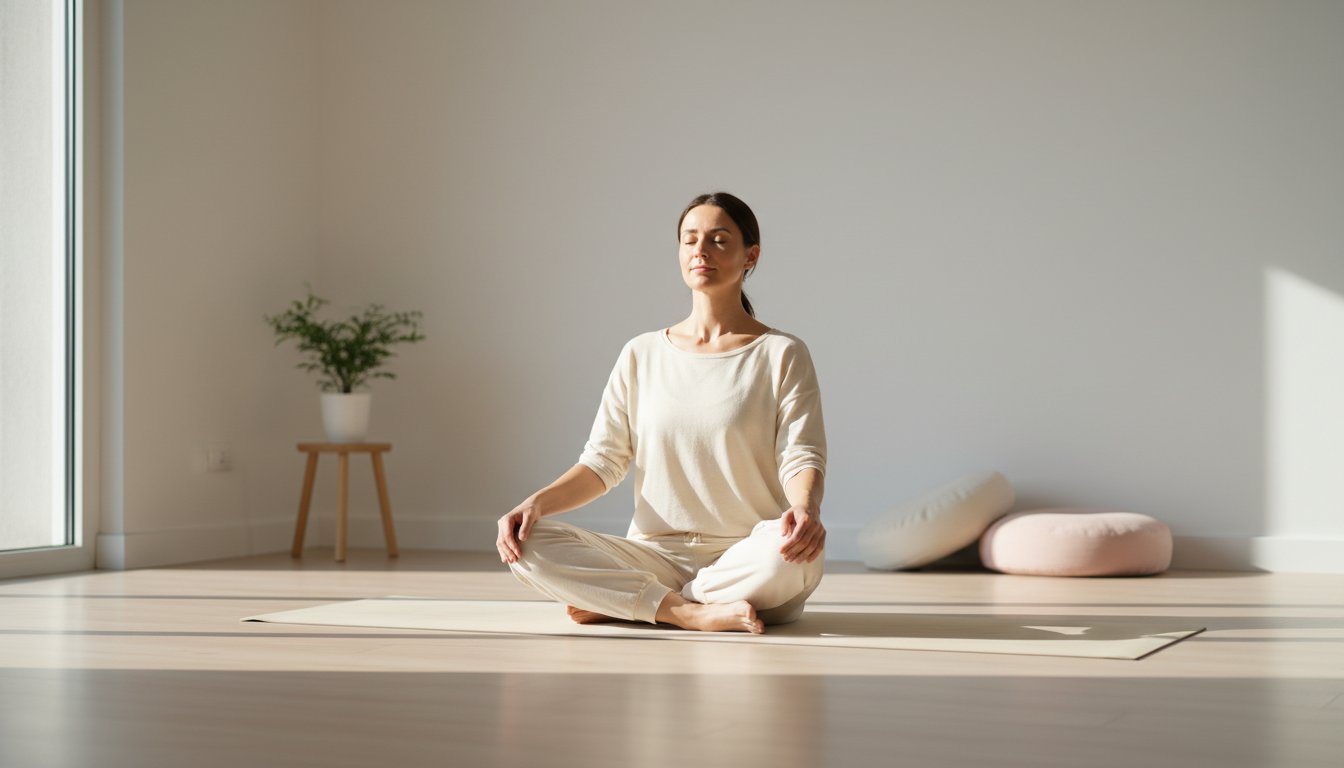
Building a mental sanctuary is a beautiful way to navigate the first twelve weeks. Simple visualization techniques can help you begin the process of bonding with your growing baby long before you feel those first kicks. By repeating affirmations that reinforce trust in your body’s innate wisdom, you replace anxiety with a sense of quiet strength. You don't have to navigate these changes alone. If you feel called to explore these restorative rhythms further, our meditation sessions offer a gentle space to cultivate this internal peace.
Essential Modifications: Poses to Avoid and Poses to Embrace
The primary intention of your practice during these early weeks is to create an internal landscape of spaciousness and ease. As your uterus begins its gradual expansion, the core principle of prenatal yoga first trimester movement becomes a focus on avoiding abdominal compression. You want to ensure that every shape you take feels like an invitation for your body to open, rather than a restriction. This transition isn't about limitation; it's about shifting your perspective to prioritize the delicate life-support system your body is currently perfecting.
Spinal mobility remains important for managing the back aches that often accompany early pregnancy, but the way you achieve it must change. Deep, closed twists that cross the midline of the body can create unnecessary pressure on the abdomen. Instead, we embrace "open" twists, where you rotate away from the midline. This allows you to maintain a supple spine and open chest while keeping the belly completely free. Similarly, you should begin transitioning away from "prone" poses, or lying flat on your belly. While you may not have a visible bump yet, moving away from poses like Cobra or Locust early on helps you establish a protective habit for the months to come.
Inversions also require a more grounded approach. While full headstands or handstands might feel accessible if you had a prior practice, they can be disorienting if you are experiencing the common dizziness or nausea of the first twelve weeks. Gentle elevations, such as resting your legs up the wall or a supported bridge with a block under your sacrum, provide the circulatory benefits of an inversion without the risk of falls or increased heart rate. These softer variations signal to your body that it is safe to relax and receive.
Safe Poses for Early Pregnancy Support
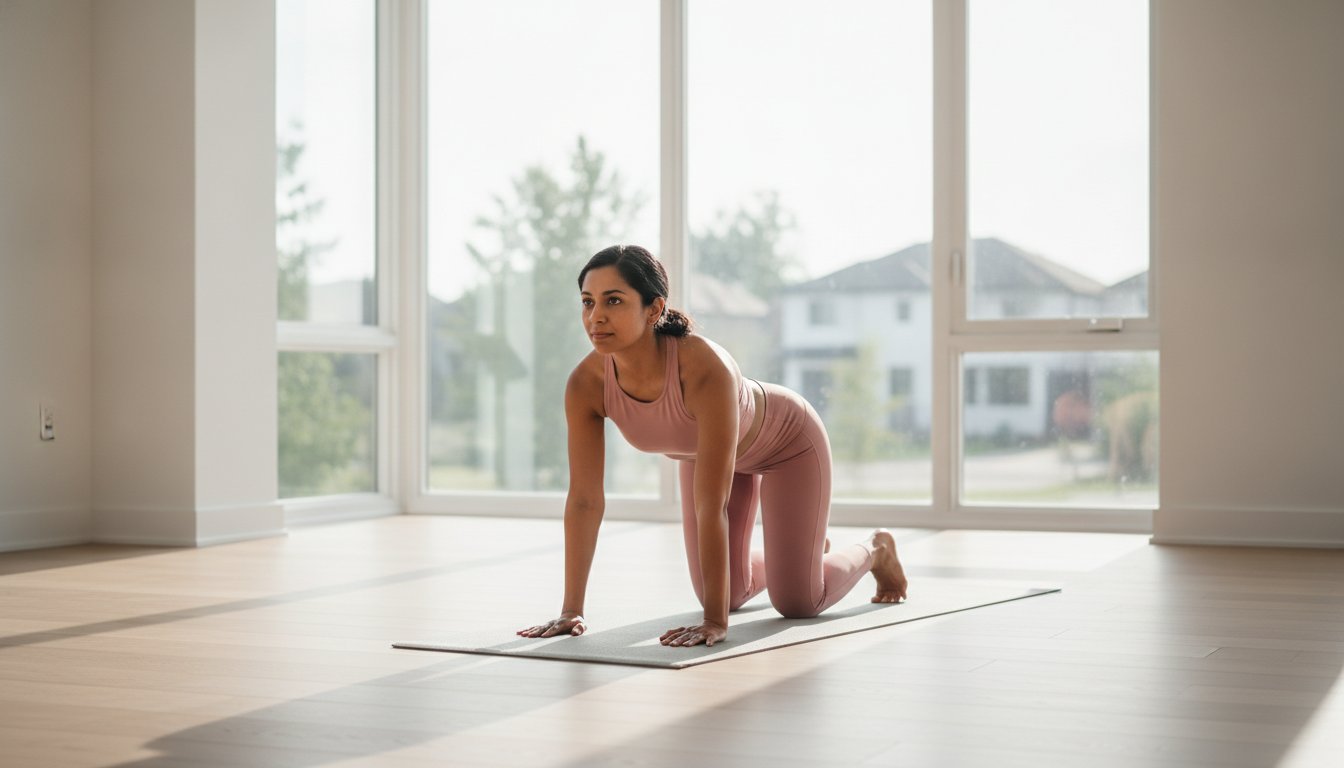
Cat-Cow is a foundational movement that offers a gentle spinal release and encourages pelvic tilting, helping to ease the tension that often settles in the lower back. Bound Angle Pose (Baddha Konasana) is another beautiful choice; it begins the soft work of opening the hips and pelvis in preparation for the journey ahead. For moments when exhaustion feels heavy, a Supported Child’s Pose with bolsters creates a nurturing cocoon of safety, allowing you to rest your forehead and chest while leaving ample room for your belly to breathe.
Practices to Approach with Caution
It is wise to avoid strong core work, such as Boat Pose, which creates excessive intra-abdominal pressure and can strain the abdominal wall. Deep backbends should also be approached with care, as they may overstretch the connective tissues before they've had time to adapt. Finally, please refrain from breath retention (Kumbhaka). Steady, continuous breathing is vital for consistent oxygenation for both you and your baby. Your breath should always feel like a soft, flowing river, never a stagnant pool.
A Gentle Home Practice: How to Support Your Body in Weeks 1–12
Creating a sanctuary at home is about more than just clearing floor space; it's about crafting an environment that feels emotionally safe and physically supportive. For many, the early weeks of pregnancy bring a heightened sensitivity to the world around them. Organizing a quiet, scent-free space is a simple yet profound way to manage nausea and prevent sensory overwhelm. By removing strong candles or diffusers, you allow your prenatal yoga first trimester practice to become a true refuge from the outside world, a place where you can simply be.
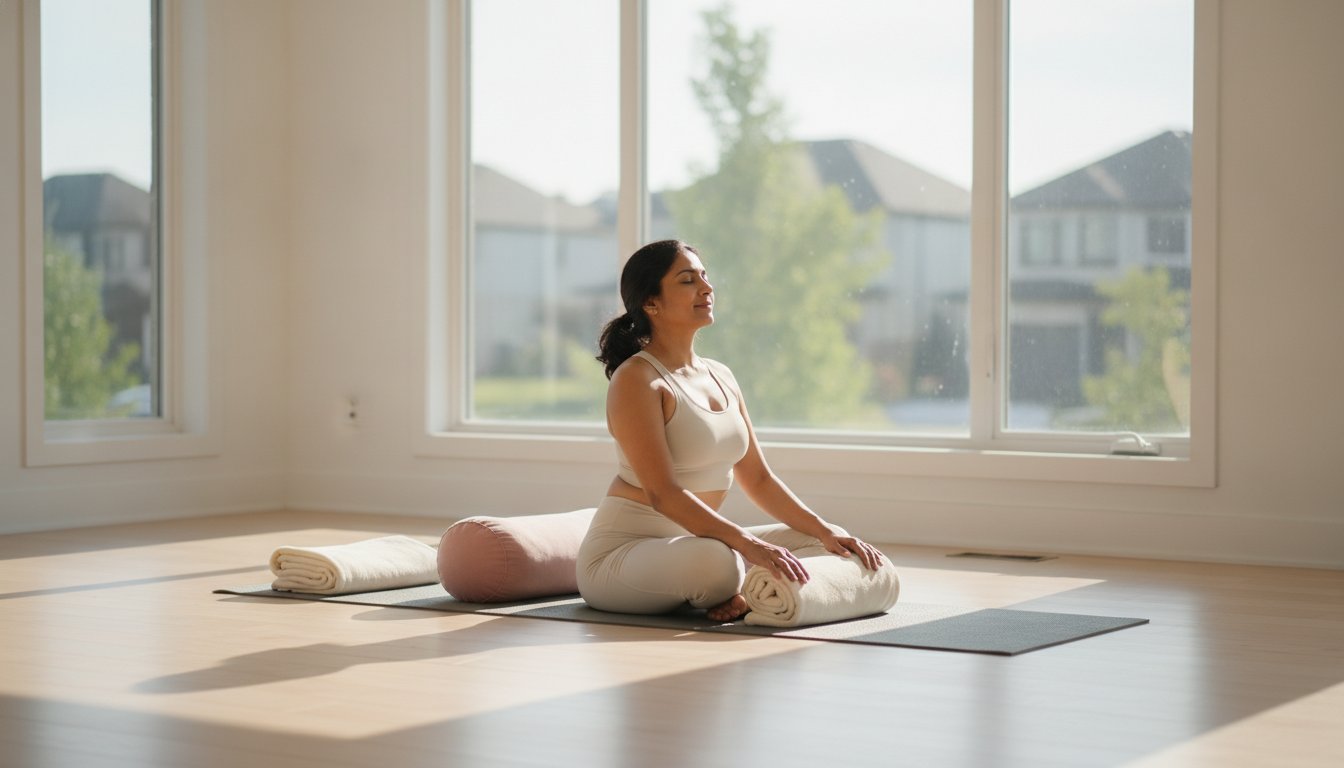
Before you begin, gather your "support team" of props. You don't need professional equipment to feel held; a few firm pillows, a heavy wool blanket, and a couple of sturdy books can serve as excellent substitutes for bolsters and blocks. These tools are essential for providing the comfort your body craves during this transition. They allow you to lean into the support, ensuring that every movement is restorative rather than draining. Integrating sound into your practice, such as a low, steady hum or exploring the resonance of sound healing, can further reset your nervous system and help you find a sense of internal balance.
Step-by-Step: The First Trimester Flow
This 15-minute sequence is designed to honour your energy levels while maintaining a gentle connection to your breath. Start with five minutes of seated grounding, utilizing Ujjayi breathing (a soft, oceanic sound at the back of the throat) to steady your mind. From there, move through three rounds of modified Sun Salutations, moving slowly and keeping your hands on blocks to avoid deep forward folds. Conclude your practice by holding a supported restorative pose, like Reclined Bound Angle, for five minutes. This shape allows the hips to soften and the chest to open without any effort on your part, encouraging a deep state of rest.
Managing Nausea Through Movement
When sickness feels persistent, the way you move can offer significant relief. Keeping your head above your heart is a key principle, as it helps reduce the pressure that often triggers feelings of queasiness. Focus on gentle neck and shoulder releases to let go of the tension that naturally accumulates when you aren't feeling your best. You might also try Sitali breath, a cooling technique where you inhale through a curled tongue or pursed lips. This helps regulate your body temperature and can provide a calming effect on the stomach. If you're looking for more personalized support, our Private Yoga Session options provide a dedicated space to adapt these practices to your unique experience.
Cultivating a Sanctuary: The Benefits of Private Prenatal Yoga in Vaughan
The first twelve weeks of pregnancy often feel like a sacred secret, a quiet internal shift that the world cannot yet see. During this time, many women find that large, co-ed public classes feel jarring or disconnected from their current emotional state. Choosing a private setting for your prenatal yoga first trimester practice offers a level of intimacy and safety that is difficult to find elsewhere. It allows you to move freely, ask questions, and express your concerns without the pressure of being observed by a crowd before you're ready to share your news.
Personalized instruction is the cornerstone of a truly restorative experience. Your energy levels may fluctuate wildly from one morning to the next, making a "one size fits all" flow feel more like a chore than a relief. In a private session, every pose is tailored to how you feel in that specific moment. If you're struggling with intense fatigue, we focus on deep rest; if you're feeling a surge of nervous energy, we prioritize grounding. This bespoke approach ensures that your practice always serves your needs, providing a sanctuary for women where your well-being is the only priority.
At Yoga House Canada, we believe that movement is only one part of the journey. We integrate sound and meditation into every session, moving beyond the purely physical to address the soul's transition into motherhood. This holistic approach helps you process the profound changes occurring within, using gentle resonance and quiet reflection to steady your heart. It's about creating a space where you feel seen, cared for, and completely supported as you navigate these early rhythms.
Individualized Support for Your Unique Journey
A private environment allows us to address specific physical needs with the depth they deserve. Whether you're managing pre-existing injuries or have specific pelvic floor concerns, our expert guidance ensures every movement is safe and intentional. We work with you to create a bespoke programme that evolves as you move toward your second trimester, ensuring a seamless transition between the phases of your pregnancy. This luxury of a quiet, undisturbed environment in the heart of Vaughan provides the perfect backdrop for your internal growth.
Your Invitation to a Meaningful Pause
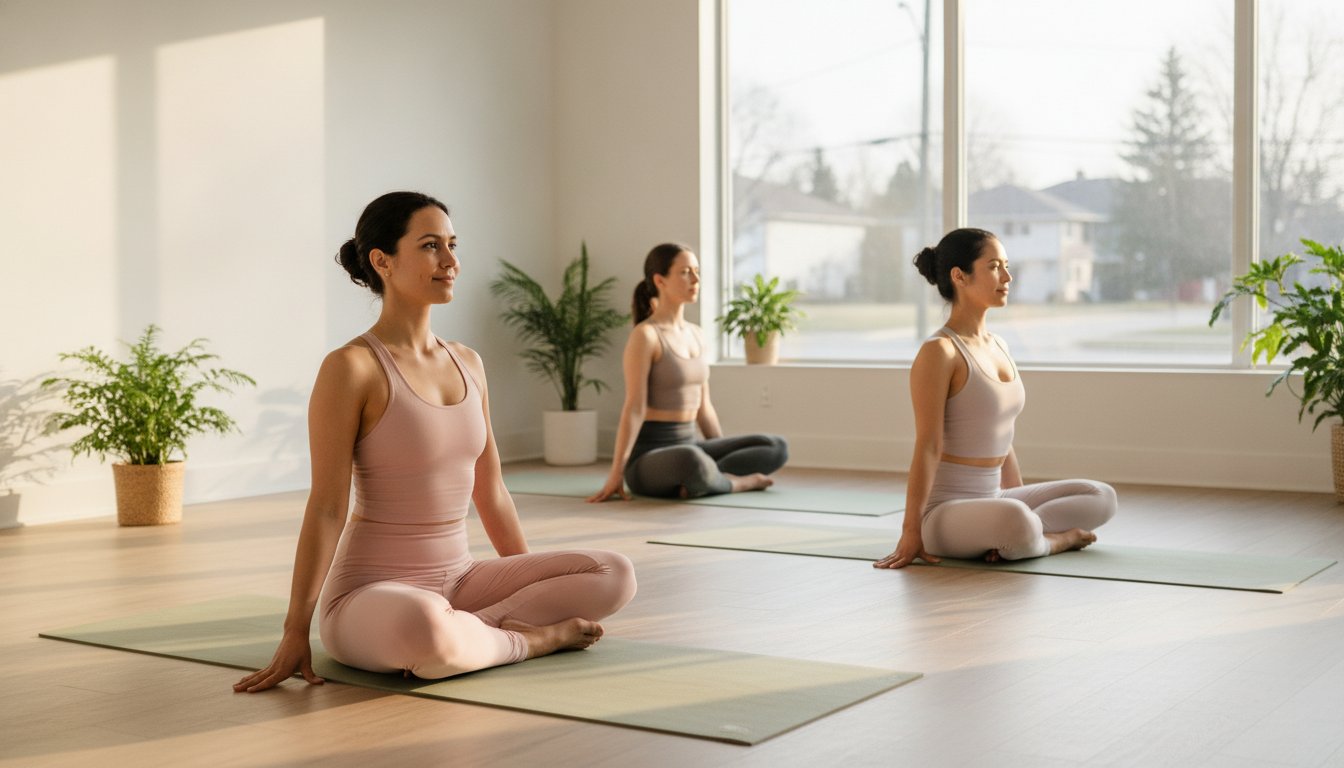
Private sessions offer the rare opportunity for deeper emotional processing, allowing you to sit with the reality of your new journey in a protected space. If you prefer to share this experience, our semi-private yoga sessions offer a beautiful way to bond with a close friend who may be on a similar path. We invite you to step away from the noise of daily life and enter a space designed specifically for your peace. You can experience a nurturing prenatal session at Yoga House Canada and discover the profound benefits of a practice that honours your unique light.
Embracing Your Journey with Intention and Ease
Transitioning into motherhood is a profound time for softening, listening, and honouring the quiet work your body is doing. By prioritizing nervous system regulation and gentle modifications, you create a foundation of stability that supports you through these first twelve weeks and beyond. Your prenatal yoga first trimester practice should always feel like a warm embrace, a place where exhaustion meets restoration and anxiety meets peace. It isn't just about physical movement; it's about finding a sanctuary where your mind and body can truly rest in unison.
At Yoga House Canada, our intimate boutique studio in Vaughan offers a specialized focus on women’s health and nervous system regulation. Our expert instructors, highly trained in prenatal care and sound healing, are dedicated to providing the gentle guidance you need during this delicate transition. We invite you to Book a Nurturing Private Prenatal Session in Vaughan to experience this supportive rhythm in a space designed entirely for your comfort. You deserve a practice that holds you with the same tenderness you're giving to your growing baby. Trust in your strength, honour your need for rest, and move forward with confidence.
Frequently Asked Questions
Can I start yoga in my first trimester if I have never practiced before?
Yes, you can absolutely begin your practice now, provided you have received clearance from your healthcare provider. Prenatal yoga is specifically designed to be accessible and supportive for those new to movement or undergoing significant life transitions. We focus on gentle, restorative shapes that prioritize emotional safety and grounding, ensuring you feel held as you learn to listen to your body's new rhythms and needs.
How often should I practice prenatal yoga during the first 12 weeks?
Practicing two to three times per week is often a gentle and sustainable rhythm for most women during this phase. However, your energy levels can be quite unpredictable; some days you may feel strong, while others require complete rest. It's more important to prioritize the quality of your presence rather than the frequency of your practice (honouring your body's need for a meaningful pause when exhaustion settles in).
What should I wear to a prenatal yoga session when my body is starting to change?
Choose soft, breathable fabrics that allow for unrestricted movement and expansion as your body begins its subtle shifts. While you may not have a visible bump yet, your sensitivity to waistbands or tight clothing often increases, so opting for high-waisted leggings or loose, layered tops is ideal. Wearing layers also helps you regulate your body temperature during restorative shapes or quiet meditation sessions.
Is it safe to do "core" exercises during the first trimester?
You should avoid intense abdominal work, such as boat pose or crunches, that creates excessive intra-abdominal pressure or straining. While maintaining a stable centre is helpful, the focus in prenatal yoga first trimester sessions shifts toward gentle pelvic floor awareness and transverse abdominal stability. This protective approach ensures you aren't overstretching the connective tissues as they begin to soften and adapt to your pregnancy.
How can yoga help with first-trimester morning sickness?
Yoga helps manage nausea by regulating your nervous system and utilizing specific breathing techniques, such as the cooling Sitali breath. Gentle, upright poses keep the head above the heart to prevent the pressure that often triggers queasiness, while restorative shapes help lower stress hormones that can exacerbate sickness. Creating a quiet, scent-free environment for your practice also minimizes the sensory triggers that often lead to feelings of nausea.
Why should I avoid hot yoga while I am pregnant?
You should avoid hot yoga because maternal overheating can be harmful to fetal development, particularly during the critical first twelve weeks. Maintaining a stable, comfortable body temperature is essential for your safety and the health of the early embryo. A serene, temperature-controlled environment allows you to focus on internal balance and peace without the physical stress and dehydration risks associated with extreme heat.
Do I need to tell my yoga instructor I am pregnant even if I am not showing?
Yes, it is vital to share this news with your instructor so they can provide the necessary modifications to keep you and your baby safe. Even in the earliest weeks, certain movements (like deep, closed twists or lying flat on the belly) should be adjusted or avoided entirely. In a private or semi-private setting, this information remains confidential, allowing your guide to protect your well-being with specialized expertise and care.
What is the difference between regular yoga and prenatal yoga?
Prenatal yoga is a specialized practice that prioritizes the unique physiological and emotional needs of the childbearing year. Unlike regular classes, prenatal yoga first trimester sessions avoid abdominal compression, emphasize pelvic health, and focus heavily on nervous system regulation. It is a nurturing sanctuary specifically designed to support you through transitions, rather than a purely athletic or general fitness environment that may not account for your changing needs.