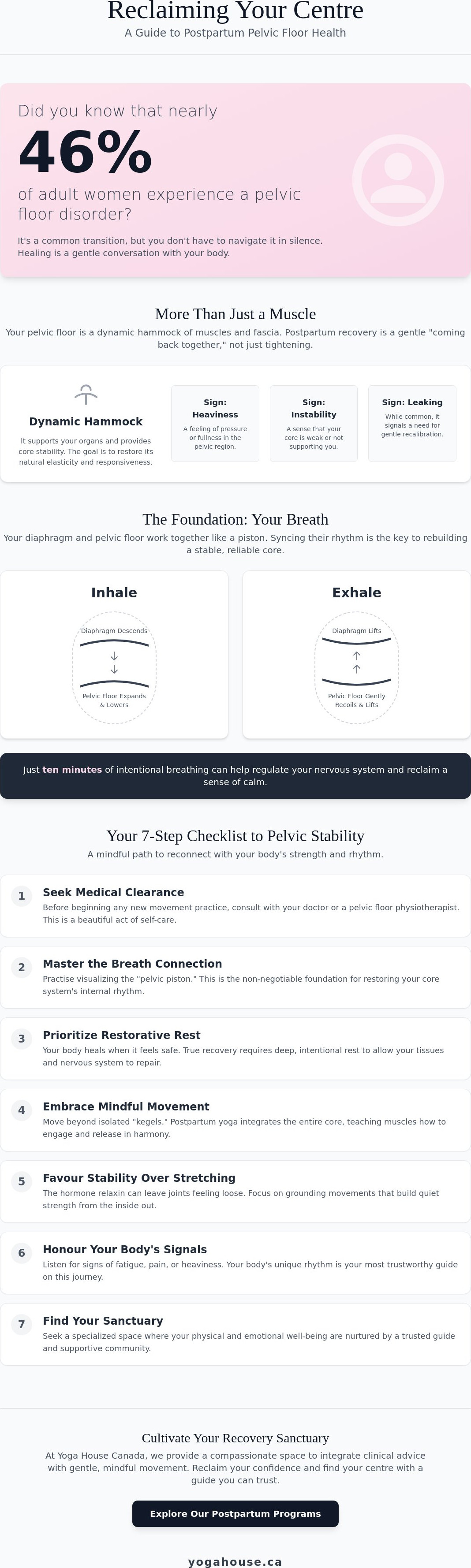
Did you know that nearly 46% of adult women experience a pelvic floor disorder? It's a staggering number, yet many of us navigate these transitions in silence, feeling a deep disconnect from the bodies we once knew. You might find yourself hesitating before a long walk, feeling exhausted by the weight of new responsibilities, or wondering if your core will ever feel like a source of strength again. It's completely natural to feel overwhelmed by conflicting advice while you're simply searching for a moment of peace, physical stability, and internal quietude.
We believe your recovery should be a gentle conversation with your body rather than a rigorous demand. By integrating mindful postpartum yoga for pelvic floor health, you can begin to re-establish the vital connection between your breath, your internal support system, and your nervous system. This article provides a compassionate, step-by-step checklist to help you reclaim your confidence, find your centre, and move with ease once more. We'll explore how to honour your body's unique rhythm, prioritize restorative rest, and implement safe movements that support your long-term wellness journey.
Key Takeaways
- Learn why your pelvic floor functions as a dynamic hammock that requires a gentle "coming back together" during this transitional phase of recovery.
- Discover the essential connection between your diaphragm and pelvic floor to help you release tension and restore your internal rhythm.
- Access a mindful 7-step checklist for postpartum yoga for pelvic floor health that prioritizes safe alignment and medical clearance.
- Realize how just ten minutes of intentional breathing can help regulate your nervous system and reclaim a much-needed sense of calm.
- Understand the importance of seeking a specialized sanctuary where your physical and emotional well-being are nurtured by a trusted guide.
Understanding the Postpartum Pelvic Floor: More Than Just Strength
The pelvic floor is often described as a simple muscle, but it's actually a sophisticated, dynamic hammock of muscles and fascia. This intricate structure, known as the pelvic floor, supports your pelvic organs and plays a vital role in your overall core stability. During pregnancy and birth, this area undergoes a profound phase of expansion to accommodate your growing baby. Postpartum recovery is the counter-phase; it's a "coming back together" that requires patience and intentionality. Simply "tightening" isn't the goal. We want to restore the natural elasticity and responsiveness of these tissues. Unlike a simple mechanical expansion, this process is deeply tied to your nervous system's ability to feel safe and supported.
Many women experience signals like a sense of heaviness, general instability, or the occasional leak when they sneeze or lift their child. While common, leaking is not a "normal" part of being a mother that you must simply accept. It's often a sign that the communication between your brain and your pelvic muscles needs gentle recalibration. Traditional "kegels" often fail to provide long-term relief because they treat the muscles in isolation. Your body doesn't move in isolation. It moves as a rhythmic, integrated whole. When you only focus on squeezing, you might actually create excess tension that prevents the muscles from functioning correctly. True healing involves the whole body. This is where postpartum yoga for pelvic floor health becomes so transformative. It integrates the entire core system, teaching your muscles how to engage and release in harmony with your breath.
The Role of Hormones and Relaxin
Relaxin is a hormone that softens your ligaments to allow for birth, and it can linger in your system for several months after delivery. This means your joints might feel more mobile or "loose" than usual. While you might feel the urge to stretch, stability is actually your greatest ally during this first year. Over-stretching vulnerable tissues can lead to further instability. We focus on grounding movements that build quiet strength from the inside out. Your body needs to feel centred and contained before it can safely find its full range of motion again.
Pelvic Floor Dysfunction vs. Natural Healing
It's important to recognize when your body needs specialized clinical support. If you experience persistent pain, significant prolapse symptoms, or a total loss of sensation, seeing a pelvic floor physiotherapist is a beautiful act of self-care. A dedicated yoga practice doesn't replace clinical care; instead, it provides a sanctuary where that clinical advice can be put into gentle practice. By integrating mindful movement with the breath, you can process the emotional weight of these physical changes. Reclaiming your body is a journey of both physical repair and emotional regulation. It's about feeling whole again.
The Breath-Pelvic Connection: The Foundation of Recovery
While many focus on the physical "squeeze," the true foundation of postpartum yoga for pelvic floor health lies in the breath. Think of your torso as a canister. At the top sits your diaphragm, and at the base lies your pelvic floor. These two structures are designed to move in a rhythmic, coordinated dance. When you inhale, your diaphragm descends, and your pelvic floor should gently expand and descend to mirror it. When you exhale, they both lift together. This isn't just about movement; it's about pressure management. When this system is in sync, your core feels stable and your organs feel supported.
Many women struggling with childbirth-related pelvic floor disorders find that their "piston" is out of sync. If you're stuck in shallow "chest breathing," your pelvic floor never gets the chance to fully relax or lengthen. This creates a state of chronic tension. A pelvic floor that's always "on" is actually a weak pelvic floor because it lacks the range of motion to respond to sudden pressure, like a cough or a laugh. We use postpartum yoga for pelvic floor recovery to bring conscious awareness back to this involuntary process. It's the first step in rebuilding a core that feels stable and reliable.
Visualizing the Pelvic Piston
To begin, find a comfortable seat where you can feel your sit bones grounded. Close your eyes and visualize the internal movement of your breath. As you inhale, imagine your diaphragm dropping down like a soft umbrella opening, while your pelvic floor gently expands. As you exhale, imagine your diaphragm lifting and your pelvic floor naturally recoiling upward. The Core Breath is the involuntary lift of the pelvic floor during a deep, mindful exhale.
Nervous System Reset
Postpartum anxiety often keeps the body in a "fight or flight" state. This sympathetic nervous system dominance causes the pelvic muscles to grip for safety, leading to a "tight" but weak pelvic floor. When your nervous system is perpetually on high alert, your muscles reflect that state. By slowing down and focusing on a long, audible exhale, you're signaling to your brain that it's safe to let go. This release is just as important as the contraction. It allows the muscles to regain their natural elasticity. In our sanctuary, we often find that incorporating sound healing vaughan techniques helps mothers release this deep-seated tension. Sound vibrations provide a sensory anchor, allowing you to drop out of your mind and into the quiet wisdom of your body. If you're feeling disconnected, a private yoga session can help you rediscover this internal rhythm in a safe, unhurried space.
Your Postpartum Yoga Checklist: 7 Steps to Pelvic Stability
Reclaiming your physical foundation is a journey that requires a gentle, methodical approach. It's not about how quickly you can return to your previous routine, but how intentionally you can listen to your body's new needs. Following a structured checklist ensures that your postpartum yoga for pelvic floor practice remains a sanctuary of healing rather than a source of strain. Here is your essential guide to a safe and restorative progression.
- Step 1: Seek professional guidance. Obtain medical clearance from your healthcare provider, and realize that your body needs this quiet time to centre. This is the moment to honour your transition.
- Step 2: Prioritize spinal alignment. Focus on stacking your ribs directly over your hips. Proper posture reduces unnecessary intra-abdominal pressure, which can otherwise strain a vulnerable pelvic floor.
- Step 3: Master the Core Breath. Before you add any complex movement, return to the breath work we discussed earlier. Ensure your diaphragm and pelvic floor are moving in unison.
- Step 4: Embrace "Closing" poses. In early recovery, prioritize movements that draw toward the midline. Avoid deep "opening" poses that might exacerbate pelvic instability.
- Step 5: Integrate your support system. Your glutes and adductors (inner thighs) act as the neighbours to your pelvic bowl. Strengthening these areas provides the external support your pelvic floor needs to thrive.
- Step 6: Listen for signals. If you feel heaviness or pressure, it's a sign to slow down. Your body's wisdom is more important than any sequence.
- Step 7: Value consistency over intensity. Ten minutes of mindful practice each day is far more beneficial than a long, exhausting session once a week.
Safety First: Poses to Modify or Avoid
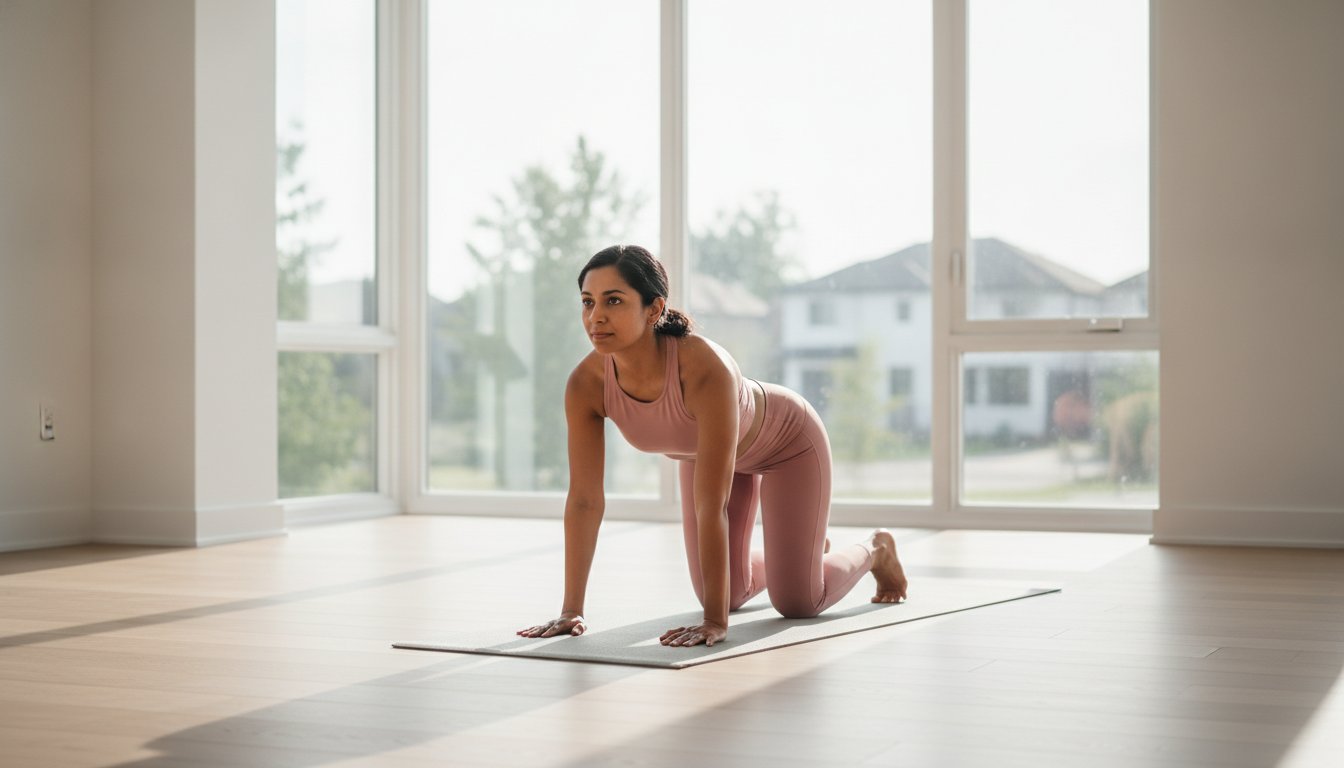
During the initial months of recovery, certain traditional poses can be counterproductive. Deep squats, such as Malasana, often place significant downward pressure on the pelvic organs. While these are wonderful for birth preparation, they may be too taxing for a healing pelvic floor. Similarly, when practising Cat-Cow, modify the "Cow" phase. Avoid letting your belly hang heavy toward the floor, as this can pull on the connective tissues. For those also managing abdominal separation, our guide on postpartum yoga for diastasis recti offers additional layers of core safety.
The Stability Sequence
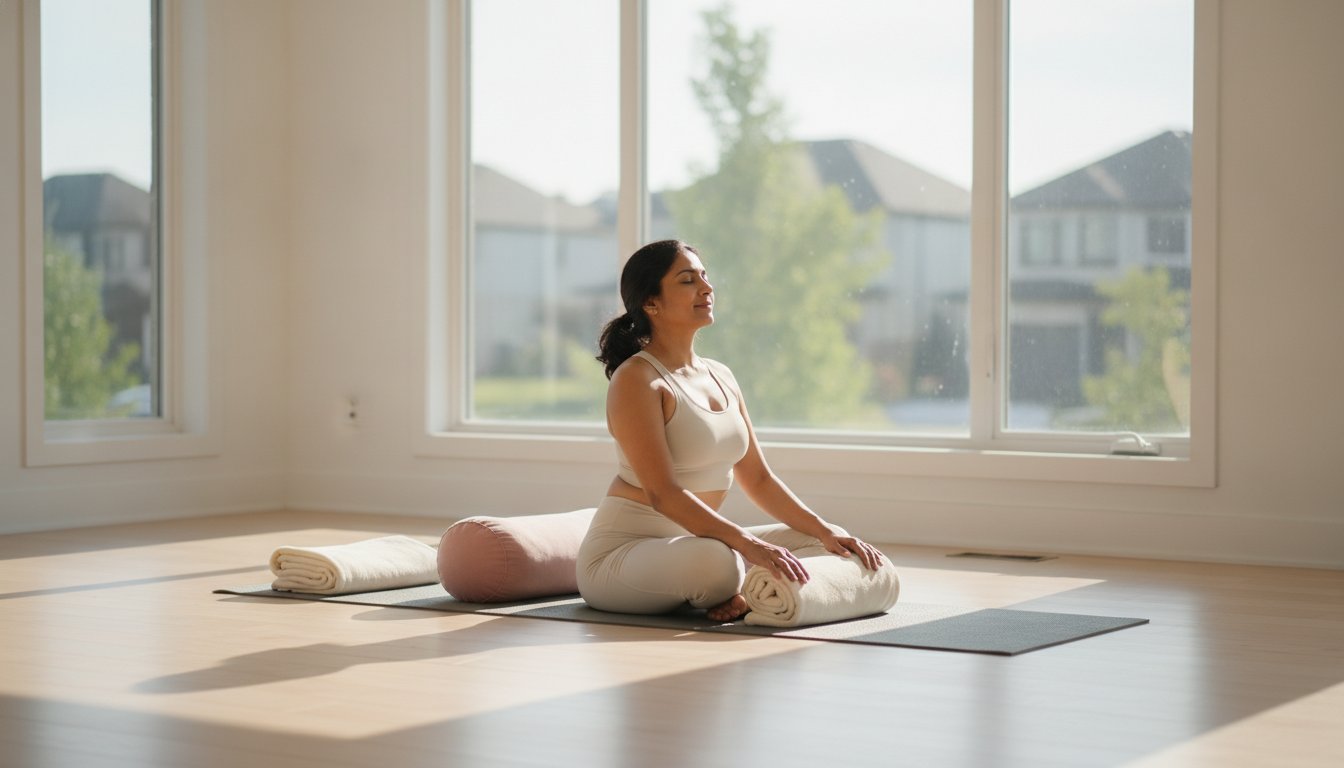
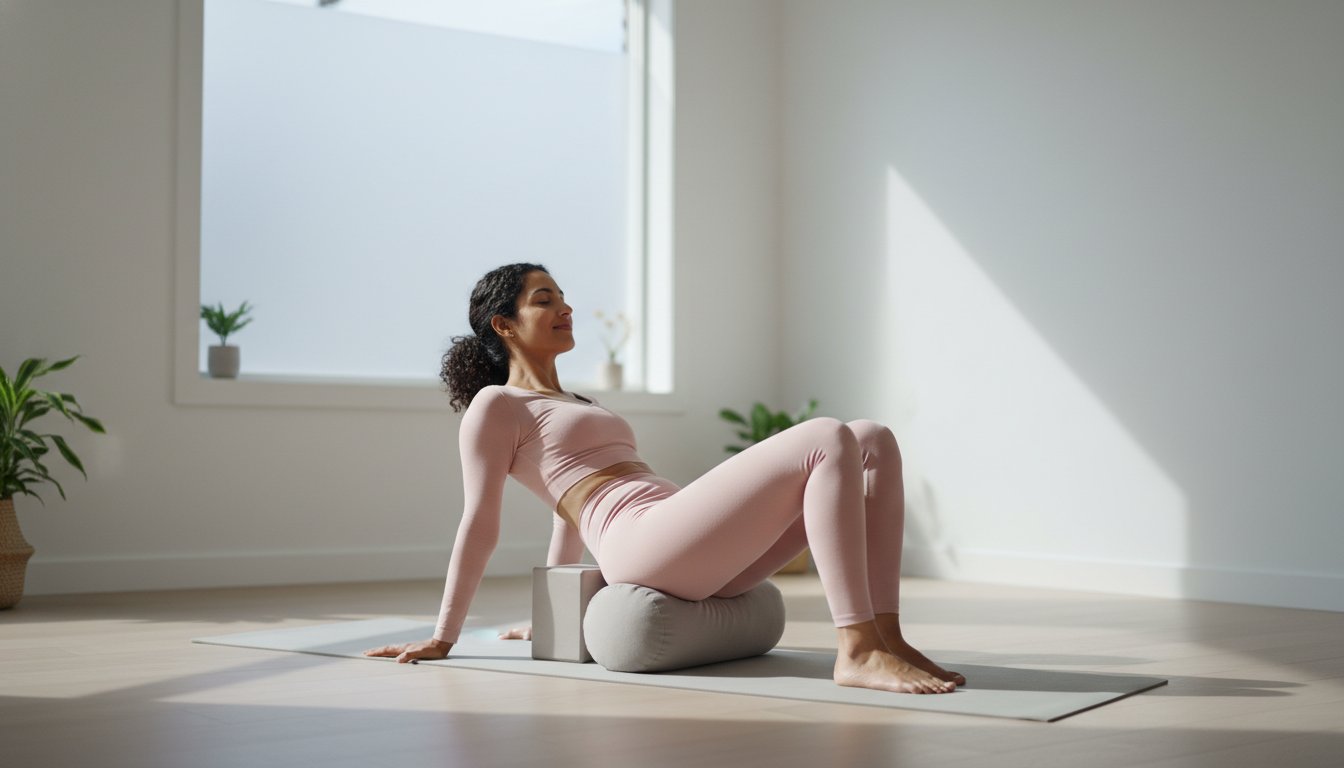
To begin your postpartum yoga for pelvic floor stability, start with Virasana (Hero’s Pose). Sitting on a block provides a grounding base and encourages a neutral pelvis. Move into Bridge Pose with a soft block squeezed between your thighs. This simple addition engages your adductors, which reflexively helps the pelvic floor lift and support you. Finally, incorporate Bird-Dog variations. By extending one limb at a time while maintaining a stable torso, you build functional core strength that carries over into your daily activities with your baby. These movements are designed to help you feel held, stable, and strong.
Addressing Common Obstacles and Objections
When you're navigating the early months of motherhood, the idea of adding "one more thing" to your schedule can feel overwhelming. You might feel a deep sense of exhaustion or worry that you simply don't have the capacity for a formal practice. It's a common myth that recovery requires hour-long sessions to be effective. In reality, just ten minutes of mindful breathing and intentional movement can significantly shift your state of being. This isn't about fitness in the traditional sense; it's about giving yourself permission to take a meaningful pause. By focusing on small, consistent moments of postpartum yoga for pelvic floor health, you can begin to restore your internal balance without adding to your mental load.
Another frequent barrier is the fear of "making it worse" or causing further damage to your body. This hesitation is often rooted in the conflicting core advice found online. It's natural to feel protective of your body after such a major transition. Managing this fear becomes much easier when you're guided by a nurturing specialist who understands the delicate anatomy of the pelvic bowl. Expert-led sessions provide the emotional safety you need to explore movement again. You don't have to guess if a movement is safe; you can simply arrive and be guided through a sequence that honours your current stage of healing.
Large group fitness classes often move at a pace that is too fast for a recovering pelvic floor. These environments frequently prioritize high-energy movements that can inadvertently increase intra-abdominal pressure. For many, this "too much, too soon" approach leads to discomfort or a feeling of heaviness. Choosing a quiet, semi-private environment allows for a deliberate and methodical rhythm. It creates a sanctuary where the focus remains on your well-being rather than the accolades of the instructor or the pace of the person on the mat next to you.
Small Group vs. Large Class
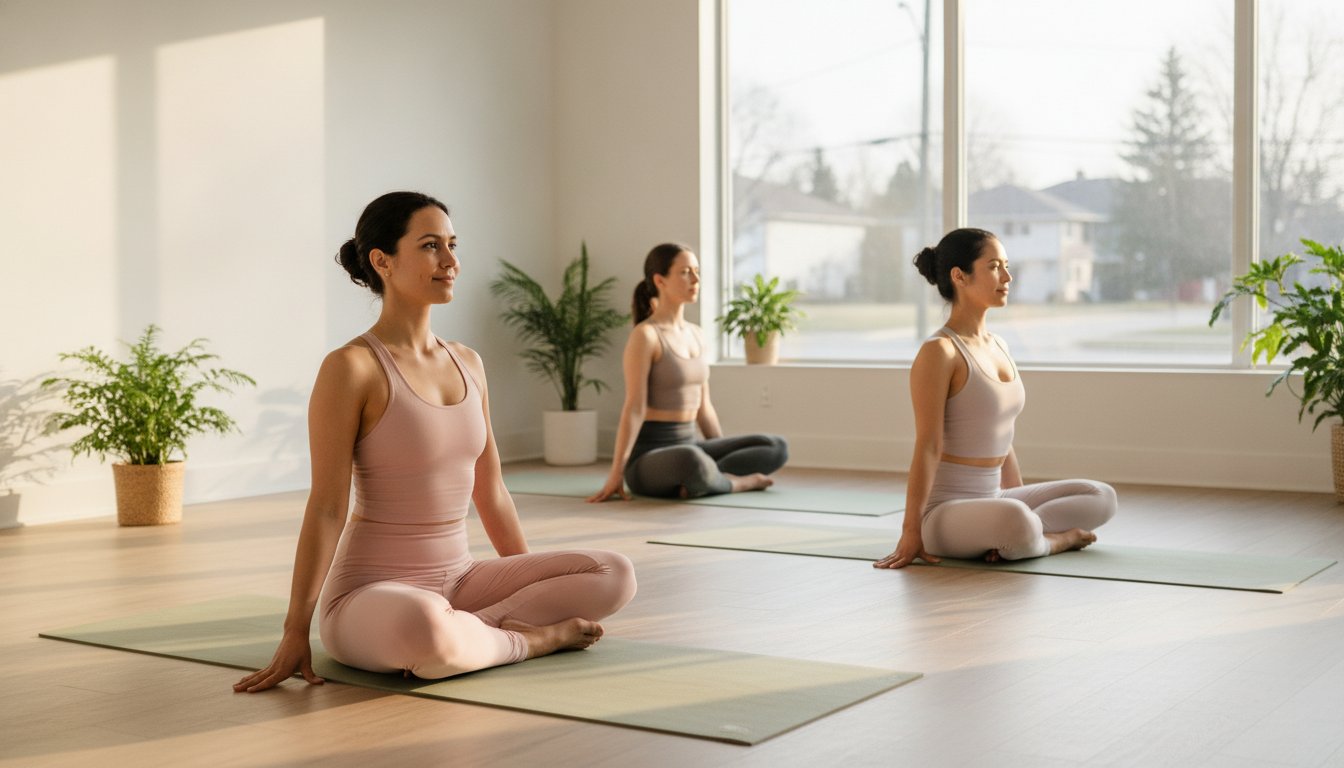
Intimate settings are essential for the subtle postural corrections that make postpartum yoga for pelvic floor recovery successful. In a boutique space, your guide can ensure your ribs are stacked and your breath is integrated. This level of attention helps you avoid the "comparison trap" that often occurs in crowded studios. If you're looking for a space that prioritizes your personal journey, our semi private yoga vaughan sessions offer a supportive environment where you can feel truly seen and cared for.
Listening to Your Body’s Signals
Learning to differentiate between the "good" work of a muscle engaging and the "bad" sensation of pelvic pressure is a vital skill. If you feel a downward bulging, a sharp pull, or an increase in leaking, these are signals from your body to back off and find a more supported variation. We encourage a slow-paced communication rhythm between your mind and your muscles. Reclaiming your strength is not a race. It's a journey of rediscovering your centre. If you're ready to explore this path with personalized guidance, we invite you to learn more about a private yoga session tailored to your unique recovery needs.
Cultivating Your Recovery Sanctuary at Yoga House Canada
Our boutique studio in Vaughan is designed to be more than just a place for movement; it's a sanctuary where you can feel truly seen and cared for during your postpartum transition. We understand that the journey of postpartum yoga for pelvic floor health is as much about emotional safety as it is about physical stability. As nurturing specialists, we guide you through this delicate season with the patience and expertise of a trusted guide. Here, the focus is never on "bouncing back." Instead, we honour the natural rhythms of your body, providing a quiet space to heal, ground, and rediscover your internal strength.
Every session in our studio is a holistic experience that integrates physical movement with meditation and sound healing. We realize that physical recovery cannot happen in a state of stress. By weaving these restorative practices together, we help you down-regulate your nervous system, allowing your pelvic muscles to release chronic tension and find their natural responsiveness. Our semi-private sessions, which are kept to a maximum of three participants, ensure you receive the personalized attention necessary for safe pelvic floor support. This intimate setting allows for a deep, intentional focus on your unique needs, ensuring every breath and movement serves your recovery.
A Tailored Experience for Vaughan Mothers
To protect the serenity and safety of our environment, we intentionally exclude co-ed and large group public classes. This choice allows us to maintain a specialized sanctuary where mothers can feel comfortable and supported. We prioritize nervous system regulation as the essential key to physical healing, recognizing that a calm mind leads to a responsive body. Your journey begins with a private or semi-private consultation, where we take the time to understand your birth story and your specific wellness goals. This methodical approach ensures that your entry into our space is unhurried and perfectly suited to your needs.
Your Invitation to Pause
Motherhood is often a cycle of constant "doing," but your recovery requires a shift into the space of "being." In your first session at Yoga House, you can expect a warm welcome, a grounding atmosphere, and a practice that meets you exactly where you are. We move slowly, breathe deeply, and prioritize your comfort above all else. This is your time to take a meaningful pause from the demands of daily life and invest in your long-term well-being. If you are ready to reclaim your stability in a space that honours your journey, we invite you to book your nurturing postpartum session today and begin your path toward holistic healing.
Reclaiming Your Internal Rhythm and Physical Strength
Your journey through motherhood is a cycle of profound transformation, and your recovery deserves to be honoured with the same care you give your little one. By prioritizing the breath-pelvic connection and following a gentle, structured progression, you can move away from the frustration of leaking or instability. True healing isn't found in aggressive exercise; it's found in the quiet moments of reconnection and the stability of a well-supported core. Integrating postpartum yoga for pelvic floor health allows you to transition from a place of physical disconnect to one of grounded confidence.
Whether you're mastering the Core Breath or seeking a sanctuary from the daily bustle, your well-being is the priority. At Yoga House Canada, we offer specialized Women’s Health Yoga through private and semi-private sessions. We've created a nurturing sanctuary in the heart of Vaughan where your personal recovery journey is our primary focus. It's a space designed to lower your heart rate and invite a state of ease.
Begin your gentle recovery journey at Yoga House Canada
You don't have to navigate this transition alone. We're here to guide you back to your centre with patience, expertise, and a deep respect for your body's unique wisdom.
Frequently Asked Questions
Is it safe to do yoga if I have a pelvic organ prolapse?
Yes, yoga can be safe and supportive for those with prolapse when movements are tailored to avoid excessive downward pressure. We focus on "closing" poses and gravity-assisted positions that help the pelvic organs feel held and supported. It's essential to work slowly and listen to your body's signals of heaviness. Many women find that a specialized practice helps them manage symptoms while rebuilding the quiet strength needed for daily life.
How soon after a C-section can I start postpartum yoga for my pelvic floor?
Most mothers can begin a gentle postpartum yoga for pelvic floor practice around six to eight weeks after a C-section, provided they have received medical clearance. Recovery from abdominal surgery requires extra patience to allow the incision and deeper tissues to heal. We start with very soft breath work and foundational core engagement. This unhurried approach ensures you aren't placing strain on your scar while you slowly rediscover your internal stability.
Can yoga help with leaking when I sneeze or jump?
Yes, yoga helps address urinary incontinence by teaching you how to manage intra-abdominal pressure through the "Core Breath." Leaking often happens when the pelvic floor cannot respond quickly enough to a sudden increase in pressure. By coordinating your breath with your movement, you train your muscles to lift and support you automatically. This rhythmic connection is the key to returning to your favourite activities without the fear of discomfort or embarrassment.
Will postpartum yoga also help with my Diastasis Recti?
Absolutely, because the pelvic floor and the deep abdominal muscles function as a single, integrated system. When you work on your pelvic stability, you're also supporting the healing of the linea alba and the closure of abdominal separation. Our sessions prioritize functional core strength that wraps around your torso like a supportive hug. This holistic approach ensures that you're rebuilding your entire "canister" rather than just focusing on one isolated area.
Do I need to be "good at yoga" to start pelvic floor recovery sessions?
No, you don't need any prior yoga experience to begin your recovery journey in our sanctuary. These sessions are about healing and internal awareness rather than achieving complex or athletic poses. We welcome you exactly as you are, whether you've practised for years or are stepping onto a mat for the first time. Our nurturing specialists provide clear, gentle guidance to ensure you feel comfortable, safe, and supported throughout every moment.
What is the difference between a regular yoga class and a postpartum-specific one?
Regular yoga classes often focus on flexibility and high-energy flows that may be too intense for a healing body. In contrast, postpartum yoga for pelvic floor health prioritizes stability, pressure management, and nervous system regulation. We avoid deep squats or heavy abdominal bracing that could hinder your progress. Every movement is chosen for its ability to help you "come back together" safely, providing a restorative environment that a general class simply cannot offer.
How often should I practise these pelvic floor exercises to see results?
Consistency is far more important than intensity, so we recommend five to ten minutes of mindful practice each day. Small, daily moments of breath work and gentle engagement help your nervous system map these new patterns of movement. You'll likely notice improvements in your stability and confidence within a few weeks of regular, quiet practice. It's about creating a sustainable rhythm that fits into your life as a busy mother.
Can I bring my baby to the semi-private sessions in Vaughan?
Our boutique studio is designed as a quiet sanctuary for mothers to focus entirely on their own healing and restorative needs. To maintain this serene and intentional atmosphere, we generally recommend that you attend your sessions solo. This allows you to fully drop out of the "doing" of motherhood and into a state of deep, personal rest. It's your precious time to pause, breathe, and nurture your own well-being without any external distractions.