Did you know that a study published in June 2025 found that 89.4 percent of women experience abdominal separation just six weeks after giving birth? If you feel a sense of disconnection from your centre, or if you find yourself worrying about "coning" every time you lift your baby, please know that you are not alone in this transition. It's completely natural to feel confused by the sea of conflicting fitness advice found online, especially when you are also managing lower back pain and pelvic floor weakness. Integrating postpartum yoga for diastasis recti into your daily rhythm offers a path back to yourself, focusing on internal restoration rather than just "fixing" a physical gap.
You deserve to feel strong, stable, and deeply cared for as your body continues its healing journey. In this guide, we will share how specialized yoga techniques can help you safely reclaim your core strength while calming your nervous system. We'll explore gentle movements designed to reduce abdominal separation, improve your posture, and provide the emotional quietude you need during these early months of parenthood (and beyond).
Key Takeaways
- Understand that healing is about managing internal pressure and restoring the function of the linea alba, rather than just closing a physical gap.
- Learn how the "Core Cylinder" and intentional breathwork form the foundation of safe postpartum yoga for diastasis recti.
- Identify high-pressure movements to avoid, such as traditional crunches or planks, to protect your abdominal wall as it recovers.
- Discover a gentle four-step routine focused on grounding and pelvic floor engagement to help you reclaim your internal stability.
- Realize why private or semi-private sessions offer the specialized attention needed to safely monitor your progress and prevent "coning" during movement.
Understanding Diastasis Recti: More Than Just a Postpartum Gap
Healing begins with understanding. When we talk about Understanding Diastasis Recti, we often focus solely on the physical space between the abdominal muscles. However, it's more helpful to view this condition as a change in the integrity of your connective tissue. Diastasis recti (DR) occurs when the linea alba, the band of tissue that holds your "six-pack" muscles together, becomes overstretched and thinned. This often leads to a feeling of softness in the abdominal centre, making it difficult for the body to manage internal pressure effectively. Whether you are six weeks or six years postpartum, your body possesses an incredible capacity for restoration through intentional practices like postpartum yoga for diastasis recti.
It's common to feel a sense of frustration or even grief when your body doesn't respond the way it used to. You might experience persistent lower back pain, a sense of pelvic floor heaviness, or a visible protrusion during movement. It's a functional challenge rather than just an aesthetic one. Your core is a complex, beautiful system. When one part is under-tensioned, the rest of the body compensates, often leading to that familiar ache in your lower back at the end of a long day. Realizing that this is a matter of pressure management, not just a "gap" to be closed, is the first step toward reclaiming your strength.
The Role of the Linea Alba
The linea alba acts as a vital bridge for your torso. During the transition of pregnancy and labour, this bridge stretches to accommodate your growing baby. Healing isn't necessarily about closing the gap entirely; it's about restoring the tension and springiness of that tissue. When we practice postpartum yoga for diastasis recti, we focus on waking up the deep layers of the core to support this bridge from within. This helps you feel stable, integrated, and strong in your daily movements, allowing the tissue to gradually regain its supportive function.
Signs Your Core is Struggling to Manage Pressure
You might notice a ridge or "loaf" shape appearing down the centre of your belly when you sit up in bed or lift your child. This is known as coning or doming. It's a clear sign that internal pressure is pushing against the weakened linea alba. This lack of support often correlates with pelvic floor issues, such as leaking when you sneeze or a feeling of heaviness. Traditional exercises like crunches or sit-ups are often counterproductive because they increase this forward pressure, potentially widening the separation. Instead, we look toward movements that create a gentle, inward hug for your midline, respecting your body's current boundaries and encouraging safe, sustainable healing.
Many mothers worry that they've missed their window for recovery. This is a common myth. The connective tissue of the body is remarkably adaptable. By approaching your recovery with patience and the right tools, you can improve your core function and find emotional balance at any stage of your motherhood journey. You aren't broken; you're simply in a season of rebuilding.
The Core-Breath Connection: The Foundation of Postpartum Yoga
In the quiet moments after birth, it's common to feel as though your body has become a stranger. When we approach postpartum yoga for diastasis recti, we begin not with physical poses, but with the internal rhythm of the breath. Your core is best understood as a "Core Cylinder," a beautiful, functional system comprised of the diaphragm at the top, the pelvic floor at the base, and the transverse abdominis wrapping around the centre. When these three elements work in harmony, they manage internal pressure and allow the thinned connective tissue of the linea alba to gradually regain its strength and resilience.
Breath is the first and most vital "pose" in your recovery journey. This isn't just a philosophical idea; research on postpartum exercise highlights how intentional movement patterns can effectively address abdominal separation. By focusing on the breath, we start to re-establish the communication between the brain and the deep abdominal muscles. This connection is often dampened by the physical transitions of pregnancy and the sensory overwhelm of early parenthood. Taking a nurturing pause to breathe allows you to move out of a "high-alert" state and into a space of restorative healing.
360-Degree Diaphragmatic Breathing
To begin, find a comfortable seat or lie down in a supported position. As you inhale, imagine your breath expanding not just into your belly, but into the back and sides of your ribcage, creating a full circle of expansion. This 360-degree expansion gently stretches the diaphragm and encourages the pelvic floor to soften and descend. As you exhale, notice the natural, subtle lift of the pelvic floor and the gentle drawing in of the deep abdominals. 360-breathing is the foundational movement for all DR recovery. This practice avoids the forceful "kegels" that many find exhausting, instead using the natural mechanics of your body to wake up your foundation.
Restoring the Nervous System to Support Tissue Repair
Healing is a holistic process that requires more than just physical movement. When your nervous system is stuck in a cycle of stress, your body produces higher levels of cortisol, which can actually inhibit the repair of connective tissue fibres. This is why creating a sense of emotional safety is just as important as the exercises themselves. Integrating sound healing vaughan into your wellness routine can facilitate a deeper state of relaxation, lowering your heart rate and allowing your body to prioritize tissue repair. When you feel calm and grounded, your body is much better equipped to respond to the gentle cues of postpartum yoga for diastasis recti.
If you feel ready to move from a state of disconnection to one of deep integration, we invite you to explore our sanctuary. Here, you can find the quietude and specialized guidance needed to support your body's natural wisdom and restorative power.
Safe Movement Framework: Yoga Poses to Avoid and How to Modify
When you step onto your mat during this delicate season, your practice becomes an act of listening rather than one of achieving. In the context of postpartum yoga for diastasis recti, we must understand how intra-abdominal pressure behaves within the torso. Imagine your core as a container; when we engage in certain shapes, the pressure inside increases. If the abdominal wall is still healing, this pressure seeks the path of least resistance, often pushing outward against the thinned linea alba. This can cause the "doming" we discussed earlier, potentially slowing the natural recovery of the tissue. Understanding Diastasis Recti treatment involves recognizing that not all movement is helpful in these early stages.
Adopting a "Red Light, Green Light" framework helps you navigate your practice with confidence and grace. Instead of pushing through discomfort, we invite you to move with a sense of unhurried curiosity. If you see your belly begin to cone or feel a sudden lack of support in your lower back, it is simply your body's way of asking for a modification. By honouring these signals, you create a sanctuary for your recovery, allowing the connective tissue to knit back together at its own rhythmic pace.
Poses to Avoid (The "Red Light" List)
In early recovery, we generally pause poses that create excessive outward pressure or extreme front-body stretching. Full Wheel (Urdhva Dhanurasana) and Upward Facing Dog are often too intense, as they pull the abdominal halves away from the midline, potentially overstretching the fragile linea alba. Similarly, Navasana (Boat Pose) creates a "V" shape that places immense demand on the deep abdominals. For many, this leads to immediate doming. We also suggest avoiding deep, bound twists that involve crunching the abdomen, as these can disrupt the steady management of internal pressure.
Safe Alternatives (The "Green Light" List)
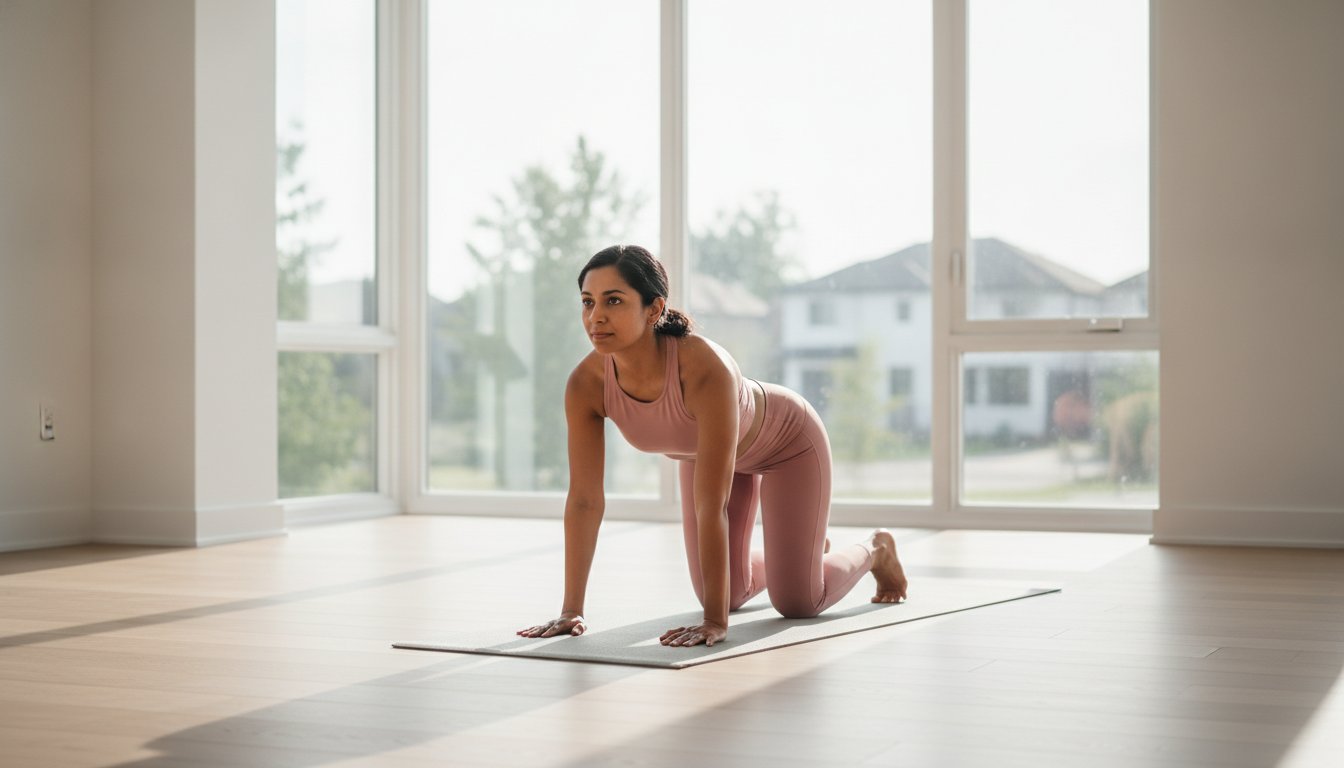
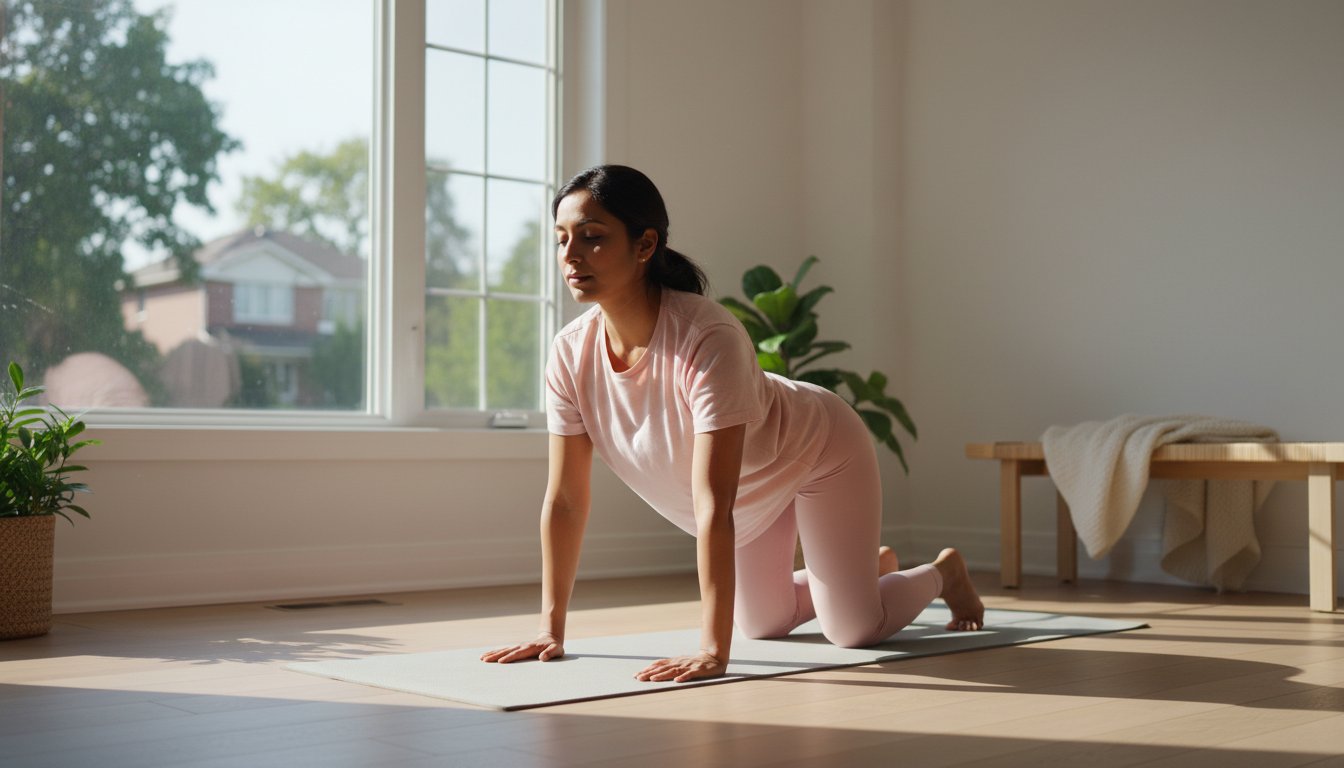
Fortunately, there are many beautiful ways to modify your practice to support healing. Instead of a full backbend, try a Modified Bridge Pose with a block between your knees. This encourages inner thigh engagement and a gentle pelvic floor lift, providing a stable foundation for the core. Cat-Cow remains a wonderful tool when synchronized with the breath; focus on the exhale to gently draw the belly toward the spine during the transition. If you crave a chest opener, Sphinx Pose is a lovely alternative to Cobra. It allows for a gentle opening of the heart while keeping the lower ribs grounded, ensuring your abdominal wall remains supported and safe.
Choosing these gentler paths isn't a sign of weakness; it's an expression of deep wisdom and self-care. As you move through your practice, remember that the goal of postpartum yoga for diastasis recti is to restore your internal connection. By favouring stability over intensity, you build a foundation of strength that will serve you for years to come.
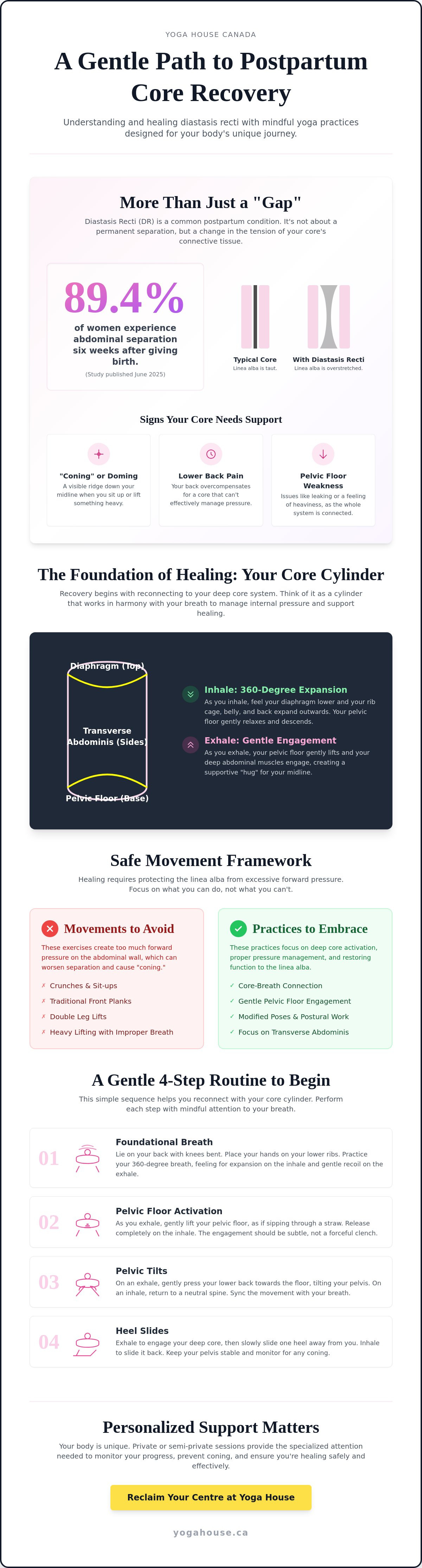
A Gentle 4-Step Yoga Routine for Abdominal Recovery
Moving your body after birth is a sacred transition that requires patience, softness, and a deep respect for your current capacity. This four-step routine is designed to help you integrate the principles of postpartum yoga for diastasis recti into a rhythmic, home-based practice. By moving through these phases, you allow your body to relearn how to manage pressure while slowly rebuilding the functional strength of your core. Remember that these movements are not about "pushing through"; they are about inviting your body back into a state of balance and ease.
Phase 1: Finding Stability and Grounding
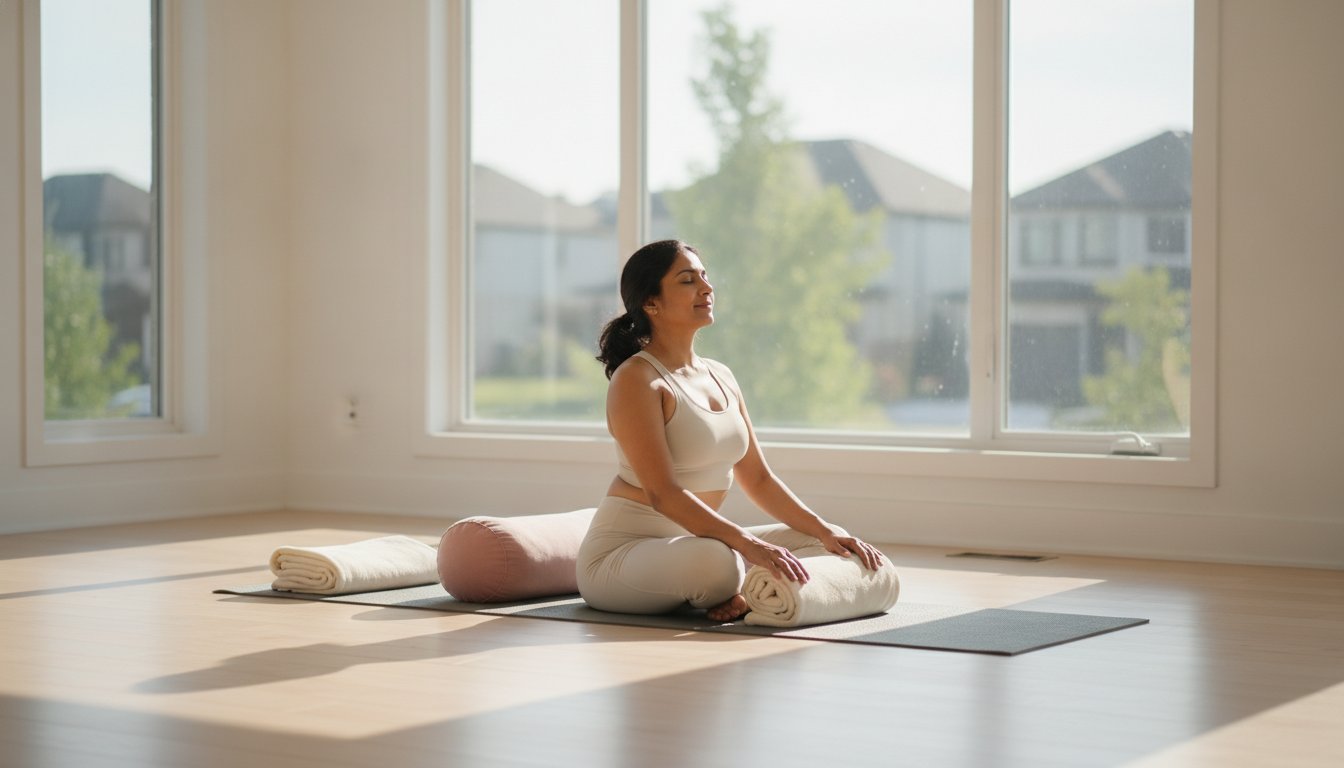
We begin by establishing a sanctuary for your practice. Find a quiet corner of your home and gather props like bolsters, cushions, or folded blankets to ensure you feel fully supported. Start by lying on your back with your knees bent, placing a small pillow under your head if it feels more comfortable. As you settle into the earth, begin gentle pelvic tilts. This subtle rocking motion helps you realize the intimate connection between your pelvis and lower back, areas that often hold tension after pregnancy.
As you move with your breath, focus on the "hugging the baby" cue during your exhalation. As you breathe out, visualize your transverse abdominis, the deepest layer of your core, gently wrapping around your centre. This intentional engagement provides a soft, internal hug for your midline, supporting the linea alba without creating the high-pressure strain found in traditional abdominal exercises. Taking this time to ground yourself ensures that your nervous system feels safe enough to allow for physical restoration.
Phase 2: Building Functional Strength
Once you feel grounded, we move into gentle, functional movements that prioritize alignment over intensity. A modified Bird-Dog is a wonderful tool for building stability. Instead of lifting both the opposite arm and leg, keep your toes tucked and resting on the floor as you extend one leg back. This modification allows you to focus entirely on your abdominal alignment, ensuring you can maintain a flat, supportive belly without the risk of "coning."
Side-lying leg lifts are another beautiful addition to your routine. By lying on your side, you can strengthen the obliques, which act as important stabilizers for the rectus abdominis. As you lift your top leg just a few inches, focus on the sensation of the belly drawing in like a gentle corset. This visualization helps you engage the deep core muscles in a way that feels supportive rather than restrictive, encouraging the abdominal halves to move toward one another in a natural, unforced rhythm.
We conclude this practice with restorative integration. Lie in a comfortable position, perhaps with a bolster under your knees, and allow your body to fully absorb the healing work you have done. This final pause is essential for nervous system regulation, helping you transition back into your day with a sense of calm and internal strength. If you feel called to begin this journey in a space specifically held for your recovery, we invite you to book a private yoga session where your unique needs are our primary focus.
Personalized Support in Vaughan: Why Private Guidance Matters
While the home-based routine we explored offers a beautiful starting point, the nuances of postpartum yoga for diastasis recti often require a more watchful, expert eye. In a large group setting or a public gym, it's easy for subtle signs of strain to go unnoticed amidst the noise and fast-paced transitions. A nurturing specialist can observe the way your abdominal wall responds to each specific movement, identifying the earliest signs of "coning" that you might not yet feel yourself. This level of attentiveness transforms your practice from a series of exercises into a precise, restorative therapy tailored to your unique body.
Choosing an intimate setting for your recovery allows you to move away from the pressure of "keeping up" and into a space of deep, internal listening. Healing is rarely a linear path. Some days your body will crave gentle expansion, while other days it will require grounding stillness. Having a trusted guide ensures that your practice always honours your current energy levels and physical readiness, providing the emotional safety needed to truly let go and heal.
The Safety of Private and Semi-Private Sessions
Having one-on-one attention ensures that every movement is "DR-safe" and specifically adapted to the width and depth of your separation. This personalized approach allows for immediate corrections in alignment and breath, preventing the compensations that often lead to lingering back pain. There is also a profound emotional benefit to sharing your recovery journey within a private, feminine space where you feel seen and supported. If you prefer the quiet camaraderie of a small circle, semi private yoga vaughan sessions provide a supportive environment where you can connect with other mothers while still receiving the individualized care you deserve.
Your Postpartum Journey at Yoga House Canada
At Yoga House Canada, our Vaughan studio is designed as a sanctuary for deep restoration. We understand that you are more than just a physical "gap" to be fixed; you are a woman navigating a major life transition that affects your spirit as much as your body. By integrating sound healing and meditation into our sessions, we address the nervous system regulation that is so vital for tissue repair and emotional balance. This holistic approach ensures that you leave each session feeling integrated, calm, and strong. You deserve this time to centre yourself and heal with intention, moving forward with a core that is resilient and a heart that is at peace.
Reclaiming Your Centre with Gentleness and Intention
Healing from abdominal separation is a journey of patience and reconnecting with your internal rhythm. We've explored how managing intra-abdominal pressure and prioritizing the core-breath connection can transform your recovery from a source of anxiety into a path of empowerment. By honouring your body's current boundaries and choosing movements that support the integrity of the linea alba, you create the space necessary for lasting physical and emotional restoration. You aren't simply "fixing a gap"; you're building a foundation of functional strength that will support you through all the seasons of motherhood.
Integrating postpartum yoga for diastasis recti into your life is most effective when supported by specialized expertise in a calm, protective environment. Our Vaughan studio offers a private sanctuary where your healing is the sole focus, combining expert guidance with the soothing power of sound healing and nervous system regulation. You don't have to navigate this transition alone. Begin your gentle recovery journey with a private consultation at Yoga House Canada and rediscover the quiet strength that already lives within you. We're here to walk beside you as you return to yourself.
Frequently Asked Questions
Is it ever too late to fix diastasis recti with yoga?
It is never too late to begin your healing journey. While the early postpartum period offers a unique window of hormonal receptivity, the connective tissue of the body remains adaptable throughout your entire life. Many women who are years or even decades postpartum find that intentional movement helps restore their internal stability and reduces lower back pain. Your body is always capable of learning how to manage pressure more effectively.
How long does it typically take to see results from postpartum yoga?
Every woman's healing rhythm is unique, but many begin to notice functional improvements within four to six weeks of consistent practice. You might first feel a reduction in back pain or a sense of integration in your centre before you see a visible change in the gap itself. Consistency and patience are your most trusted companions as your tissue gradually regains its natural tension and resilience.
Can I do yoga for diastasis recti if I had a C-section?
You can certainly practice yoga for diastasis recti after a C-section, provided you have received clearance from your healthcare provider. This typically occurs around eight to ten weeks postpartum. Because a C-section involves a surgical transition through several layers of tissue, we focus on very gentle, breath-led movements. These practices encourage scar tissue mobility while protecting your healing abdominal wall from excessive strain.
What are the first signs that a yoga pose is making my DR worse?
The most common sign that a pose is creating too much internal pressure is coning or doming along your midline. You might also feel a sudden heaviness in your pelvic floor or a sharp pull in your lower back. If you notice your belly pushing outward rather than drawing inward during an exhale, it is a clear signal to soften your movement or choose a more supported modification.
Should I wear a postpartum belly bind during my yoga practice?
We generally recommend practicing without a belly bind to allow your deep core muscles to learn how to engage and manage pressure independently. While binds can provide external support during daily tasks, your yoga practice is a time to wake up your internal corset. If you feel you need the bind for stability, it may be a sign to choose gentler, more supported poses instead.
How often should I practice these gentle movements to see improvement?
Short, frequent sessions are often more effective than one long practice. Aiming for five to ten minutes of breathwork and gentle movement daily allows your nervous system to stay regulated and your muscles to receive consistent cues for healing. These snack-sized sessions are much easier to integrate into the busy rhythm of life with a young family while still providing meaningful, long-term results.
Is it safe to do "Cat-Cow" if I have a large abdominal separation?
Cat-Cow is safe for most women with a large separation, provided it is practiced with a focus on breath rather than deep stretching. In the Cow position, avoid letting your belly simply hang toward the floor; instead, maintain a gentle lift. During Cat, use your exhale to softly draw your navel toward your spine, ensuring you aren't creating forceful tension that could pull the gap further apart.
What is the difference between "doming" and normal muscle engagement?
Normal engagement feels like a gentle, inward hug that flattens or slightly draws the abdominal wall toward your spine. In contrast, doming appears as a vertical ridge or a loaf shape protruding down the centre of your belly. This protrusion indicates that your internal pressure is overwhelming the linea alba, whereas true engagement involves the deep transverse abdominis supporting your midline from within in a stable way.