What if the secret to a smoother birthing experience isn't just about how wide your pelvis can open, but how deeply your nervous system can rest? It's completely natural to feel a sense of apprehension as your due date approaches, especially when late-pregnancy aches like back pain or pelvic pressure make it hard to feel at home in your own skin. Because you deserve to feel supported during this transition, we've designed this guide to explain how yoga to prepare for labor serves as more than just a physical stretch; it's a way of creating a sanctuary within yourself where you can soften, breathe, and trust.
In this guide, you'll discover how a specialized prenatal yoga sequence and dedicated nervous system regulation can help you approach your birthing journey with confidence, ease, and strength. We'll explore gentle ways to increase pelvic mobility, learn practical tools for managing the intensity of contractions, and find physical relief from the discomforts of the third trimester. We'll walk through the specific movements and breathing techniques that allow you to reconnect with your body's natural rhythms, ensuring you feel empowered and steady as you prepare for labour and the arrival of your little one.
Key Takeaways
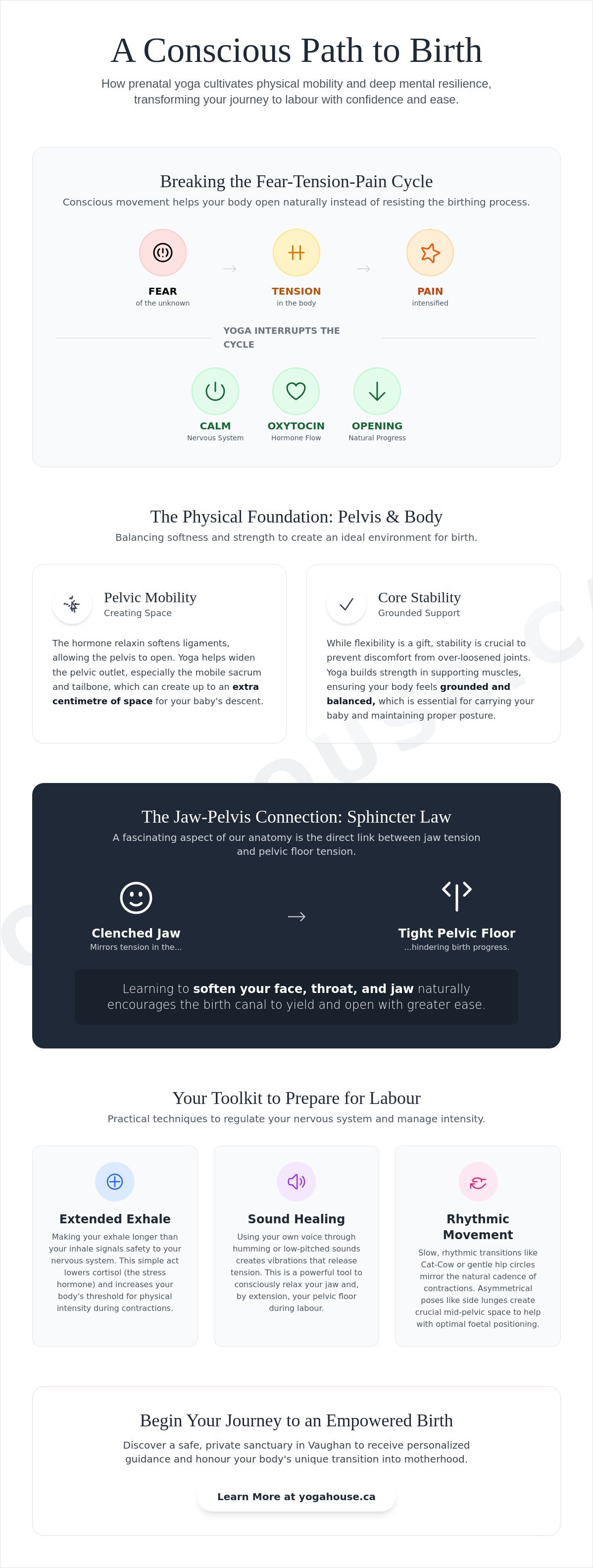
- Learn how conscious movement helps break the fear-tension-pain cycle, allowing your body to open naturally instead of resisting the birthing process.
- Understand how to navigate the effects of the hormone relaxin by balancing pelvic mobility with sacrum stability to find relief from late-pregnancy pressure.
- Discover a nurturing sequence of yoga to prepare for labor that uses rhythmic, slow-paced transitions to mirror the natural cadence of early contractions.
- Master the art of the "extended exhale" and sound healing techniques to lower cortisol levels and increase your threshold for physical intensity.
- Explore why a private sanctuary setting in Vaughan offers the safety and personalized guidance necessary to truly honour your body's unique transition.
Why Conscious Movement is Essential to Prepare for Labour
Prenatal yoga for labour is far more than a modified exercise routine; it's a specialized practice designed to cultivate physical mobility, rhythmic breath, and deep mental resilience. When we practice yoga to prepare for labor, we aren't just stretching tired muscles. We're training the nervous system to remain calm and steady in the face of intensity. This intentional movement encourages the body to release oxytocin, the primary hormone responsible for labour progress. Oxytocin flows most freely when a mother feels safe, warm, and unobserved, which is why our practice focuses on creating a private sanctuary of peace within the self.
Beginning this journey as early as possible allows these grounding habits to become second nature. Integrating gentle prenatal yoga first trimester movements helps establish a foundation of trust with your changing body long before the third trimester begins. Historically, Yoga during pregnancy has been used to help women tap into their innate wisdom, moving away from the "fear-tension-pain" cycle that can often stall delivery. By dedicating time to yoga to prepare for labor, you're giving yourself the gift of a meaningful pause, replacing apprehension with a quiet, grounded presence.
The Mind-Body Connection in the Third Trimester
The relationship between your brain and your cervix is profound, linked directly through the intricate pathways of the nervous system. When the mind perceives a threat or feels overwhelmed, the sympathetic nervous system takes over, which can cause the pelvic floor to tighten instinctively. Through guided meditation and the support of a nurturing specialist, you can learn to visualize a positive birthing experience. This process allows you to gently release any "birth trauma" narratives you may have encountered, replacing them with a sense of internal balance and stability.
How Prenatal Yoga Encourages Optimal Foetal Positioning
As your due date nears, the way you move and carry yourself influences how your baby settles into the pelvis. We focus on creating space in the mid-pelvis, using specific postures to encourage the baby to rotate into the optimal anterior position. Maternal posture is key; by lengthening the spine and softening the tissues of the pelvic bowl, you create a clear path for the baby's descent through the birth canal. In our practice, we realize that softening is just as vital as strengthening. A supple, responsive pelvic floor can move and yield, which is essential for a smoother and more efficient delivery.
The Physical Foundation: Pelvic Mobility and Sacrum Stability
The pelvis is often misunderstood as a rigid, fixed structure, but in reality, it's a beautifully dynamic system of joints, ligaments, and bones. During pregnancy, your body releases relaxin, a hormone that softens these connective tissues to prepare for the baby’s passage. While this flexibility is a gift, it also requires intentional stability work to prevent discomfort and ensure your body feels grounded. Using yoga to prepare for labor allows you to find that delicate balance between opening the body and maintaining the structural integrity needed to support your baby as they grow.
One fascinating aspect of our anatomy is the "sphincter law," which highlights the direct connection between the jaw and the pelvic floor. When we clench our teeth in response to stress or pain, our pelvic muscles often mirror that tension, which can hinder the natural progress of birth. By practicing breathing and relaxation for labor, you learn to soften your face, throat, and jaw, which naturally encourages the birth canal to yield and open with greater ease.
Opening the Pelvic Outlet for a Smoother Descent
As the baby moves lower in the final weeks, widening the bottom of the pelvis becomes our primary focus. The sacrum and tailbone are designed to be mobile, swinging back like a gentle trapdoor to create up to an extra centimetre of space during the pushing stage. Asymmetrical poses like side lunges create mid-pelvic room by shifting the pelvic bones in relation to one another. These subtle movements help you understand how to move with your body’s natural mechanics, fostering a sense of trust in your physical capabilities.
Relieving Pregnancy-Related Back Pain and Sciatica
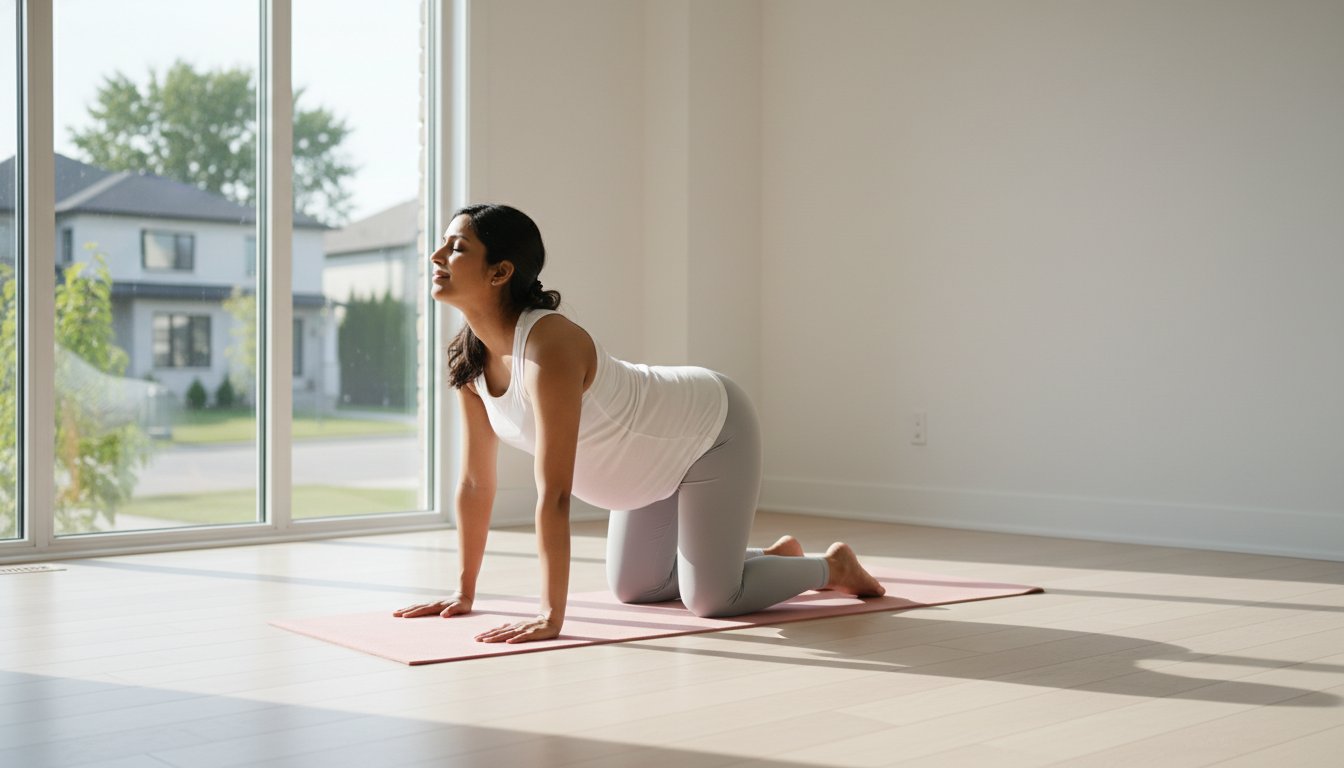
Late-pregnancy often brings physical challenges like a dull ache in the lower back or the sharp pull of sciatica. We address these through prenatal yoga for back pain, focusing on gentle stretches that release the piriformis muscle and alleviate pressure on the nerves. Pelvic tilts, often called Rocking Cat/Cow, are the gold standard for spinal decompression, offering a rhythmic way to create space between the vertebrae. To ensure you feel fully supported, we utilize bolsters and props to make every stretch a restorative, comforting experience.
Building Functional Strength for Active Birthing Positions
Preparing for an active birth requires more than just flexibility; it requires the functional strength to hold upright positions such as squatting, kneeling, or lunging. We focus on building endurance in the legs and maintaining core stability without resorting to traditional abdominal crunches. Because every pregnancy is unique, private yoga sessions allow us to tailor these movements to your specific body type and energy levels. By integrating yoga to prepare for labor into your daily rhythm, you develop the stamina and body-confidence needed to approach your birthing day with a steady, quiet strength.
A Nurturing Sequence: Specific Yoga Poses to Prepare for Labour
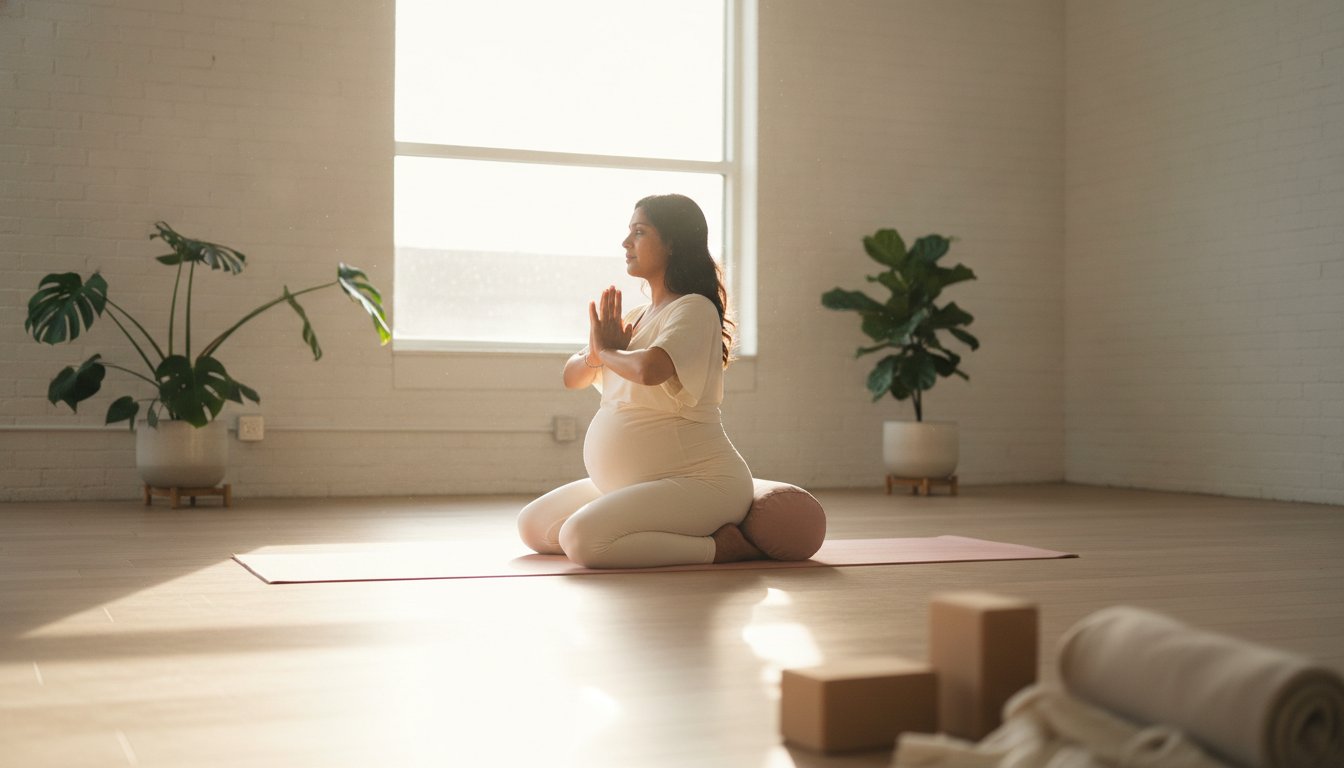
Establishing a daily ritual of movement allows your body to internalize the slow, rhythmic transitions it will eventually mirror during the early stages of contractions. When you engage in yoga to prepare for labor, you're training your physical and emotional self to move with ease rather than resistance. You don't need a professional studio to begin; a sturdy kitchen chair, firm pillows, or a stack of folded blankets can serve as perfect supportive props. It's vital to listen deeply to your body's "stop" signals, as the hormone relaxin makes it quite easy to overstretch delicate ligaments. Understanding the benefits of prenatal yoga means recognizing that safety is the foundation of any effective practice. To keep your movement safe and supportive, it's helpful to remain aware of prenatal yoga poses to avoid, such as deep closed twists or lying flat on your back after the first trimester.
Asymmetrical Poses for Pelvic Space
Asymmetrical movements are particularly effective for creating space in the mid-pelvis, helping your baby find the best position for descent. Side lunges, performed safely while holding onto a chair for balance, allow the pelvic bones to shift and open gently. You might also explore 90/90 hip rotations, which release the deep rotators of the hip to encourage the baby to drop lower. Finally, a modified gate pose, stretching the side body while kneeling, helps improve your lung capacity, ensuring you have the breath support needed for the intensity of labour breathing.
Grounding Poses to Release the Pelvic Floor
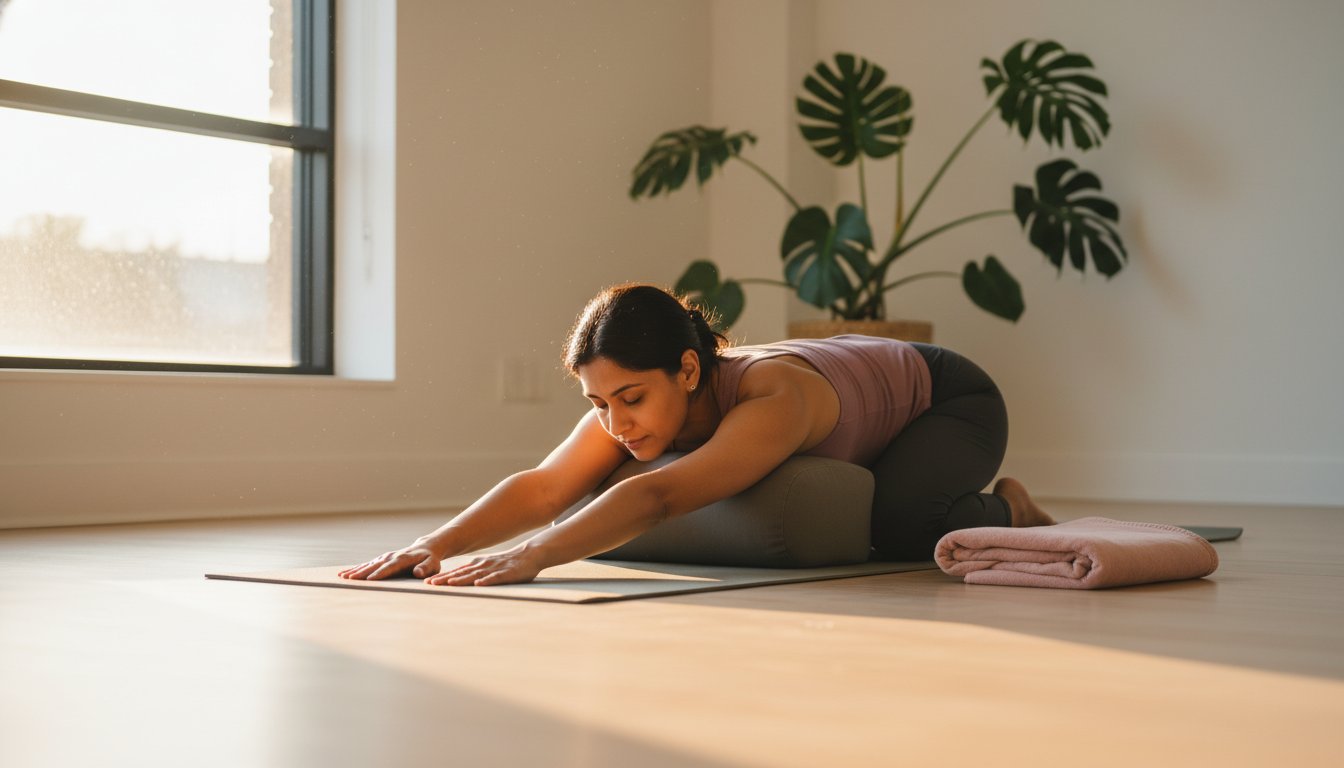
Grounding poses help you connect with the earth and release tension in the pelvic bowl. The deep squat, or Malasana, is often considered the ultimate birth-ready pose; however, if you feel a sense of heaviness or have pelvic floor concerns, please use a block or a stack of pillows for support. A seated or wall-supported Figure 4 stretch is excellent for targeting the glutes and sacrum area without the discomfort of lying flat. To conclude this segment, a wide-knee child’s pose offers a quiet sanctuary for "turning inward," allowing your mind to settle and your heart rate to slow.
Restorative Poses for Deep Relaxation
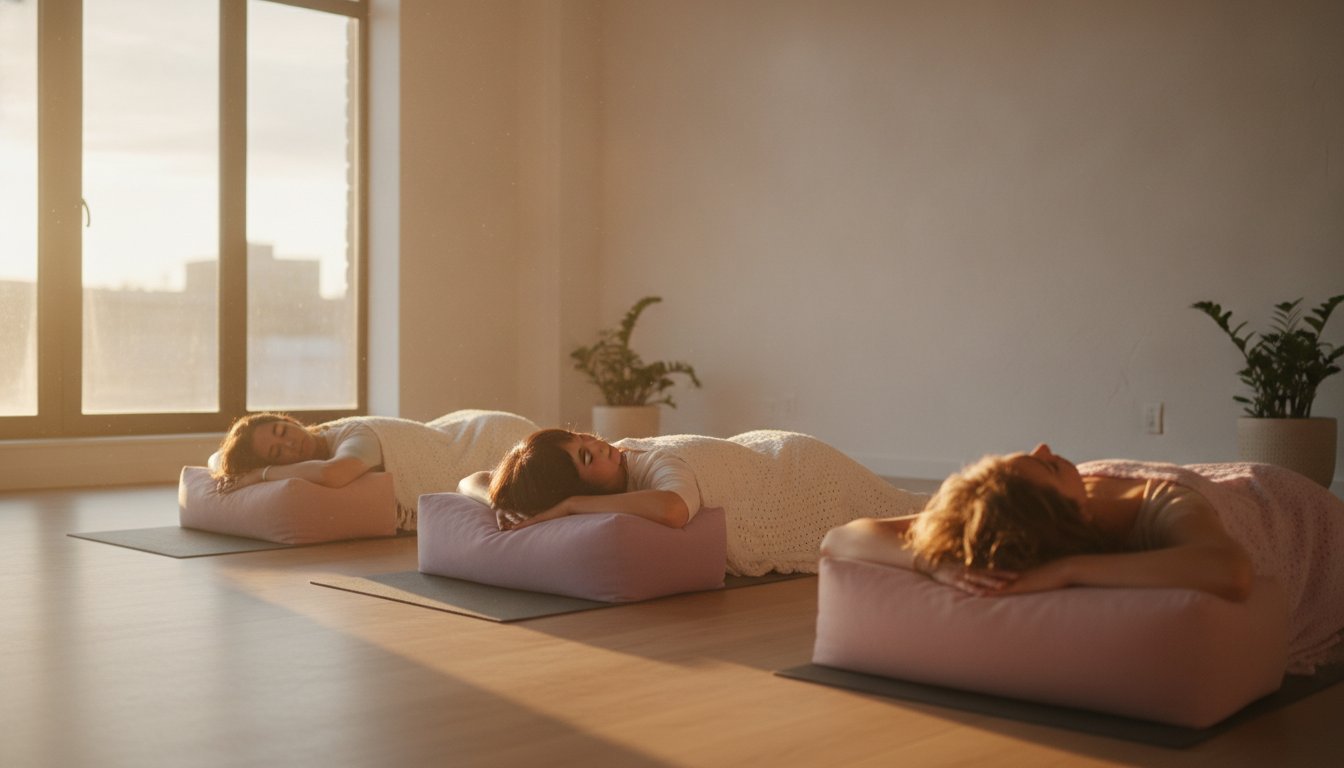
In the final weeks, rest is just as productive as movement. Side-lying Savasana, supported by pillows between the knees and under the belly, is the optimal way to rest in the third trimester. You might also enjoy a supported butterfly pose, where the soles of your feet touch and your knees are fully nurtured by cushions. These poses are more than just rest; they're an opportunity to practice "active surrender." This is a vital skill for the transition phase of labour, where the ability to yield to the process becomes your greatest strength. Practicing yoga to prepare for labor in this way ensures you are physically rested and emotionally ready for the journey ahead.
Nervous System Regulation: Breathing and Sound for Birth
While physical mobility is a cornerstone of your preparation, the ability to regulate your nervous system is what allows those physical openings to occur. Labour is an endurance event for the spirit as much as the body. When you utilize yoga to prepare for labor, you are learning to shift from a state of high-alert into the parasympathetic "rest and digest" mode. This shift is essential because the muscles of the uterus and birth canal perform their best work when the body feels safe and unobserved. By practicing these internal tools now, you create a mental sanctuary that you can retreat to, regardless of the environment around you when the time comes.
The breath is the most direct bridge to your nervous system. A long, unhurried exhale sends a clear signal to your brain that there is no immediate threat, which in turn prevents the "fear-tension-pain" cycle from taking hold. This internal softening is the true essence of yoga to prepare for labor. To deepen this sense of internal peace and learn these techniques in a supportive environment, we invite you to explore our Meditation and Sound Healing sessions.
The Power of the Exhale: Diaphragmatic Breathing for Labour
During the first stage of labour, "Golden Thread" breathing is a transformative tool. As you feel a contraction begin, inhale deeply through your nose, then exhale through pursed lips as if you are slowly blowing a single golden thread across the room. These deep diaphragmatic breaths do more than just calm the mind; they gently massage your internal organs and ensure the uterus receives the steady supply of oxygen it needs to function efficiently. To release sudden tension in the face or pelvic floor, you can use "horse breath," which involves fluttering your lips together loosely on a long exhale to vibrate the jaw and throat.
Sound Healing and Vocal Toning for Pelvic Release
As we discussed previously regarding the connection between the jaw and the pelvis, vocal toning provides a physical way to encourage the birth canal to yield. Low-frequency humming or deep "Ooh" and "Aah" sounds stimulate the vagus nerve, which is a primary component of your relaxation response. These low and deep sounds are significantly more effective for pain management than high-pitched cries, as they keep the energy of the body moving downward and outward. Integrating crystal bowl sound healing during your pregnancy further refines this regulation, using vibrational frequencies to lower cortisol and steady your heart rate. This practice of "vocalizing the breath" transforms sound into a nurturing anchor, helping you remain present and grounded through every wave of transition.
Personalized Prenatal Support at Our Vaughan Yoga Sanctuary
Choosing prenatal yoga in Woodbridge ON or Vaughan allows you to step away from the noise of the outside world and into a space specifically curated for your transition. Large group classes, while common, often prioritize volume over individual care, which can make it difficult to focus on the subtle internal shifts required when using yoga to prepare for labor. In our sanctuary, we prioritize your emotional safety above all else. We understand that every birthing goal is unique, and our intimate environment ensures you feel seen, heard, and supported as you navigate the physical and emotional waves of late pregnancy.
Our approach is rooted in the belief that your environment significantly impacts your ability to soften and open. By stepping into a local, in-person setting, you're not just attending a class; you're entering a community that values depth and quietude. This personal connection is what transforms a simple exercise into a grounding ritual, providing the stability you need as your due date approaches. It's about creating a predictable, safe rhythm that your nervous system can rely on during times of change.
The Benefits of Semi-Private Prenatal Sessions
We believe that true preparation happens in quiet, unhurried settings where you can truly listen to your body's wisdom. Our semi-private sessions are intentionally limited to a maximum of three or four women to ensure that every movement is correctly aligned and safe for your specific stage of pregnancy. This small group intimacy allows you to build a community of local mothers who are on the same timeline, sharing the journey in a space that feels like a sanctuary rather than a clinical environment. Because your instructor knows your medical history and your specific birth plan, they can offer guidance that feels like a steady hand, helping you move with confidence and grace.
Transitioning from Pregnancy to Postpartum
Preparing for labour also means preparing for the gentle return to yourself in the weeks that follow. The deep diaphragmatic breathing and pelvic floor awareness you practice now through yoga to prepare for labor will support your physical recovery during the fourth trimester. Once you've moved through the initial weeks of motherhood, our postpartum yoga sessions offer a soft place to land as you begin to reclaim your physical strength and emotional balance. We invite you to take a meaningful pause today to consider what you need for this transition. Please reach out to book a consultation so we can discuss how to best support your path toward a confident and nurturing birth experience.
Step Into Your Birthing Journey with Confidence
Preparing for the arrival of your little one is a sacred transition that deserves a dedicated space for quietude and connection. We've explored how focusing on pelvic mobility and the connection between the jaw and pelvic floor can ease physical descent, while mastering the extended exhale allows your nervous system to remain steady during intensity. By choosing specialized yoga to prepare for labor, you're not just exercising; you're building a reservoir of internal strength and peace that will serve you throughout your entire birthing experience.
Our Vaughan sanctuary is uniquely specialized in Women's Health and Prenatal Care, offering intimate semi-private sessions that prioritize your personal guidance and emotional safety. We integrate restorative sound healing and meditation to ensure your readiness is holistic, addressing the mind and spirit alongside the body. When you're ready to embrace this meaningful pause, we invite you to Book Your Private Prenatal Sanctuary Session in Vaughan. You have the innate wisdom to navigate this path, and we're here to walk beside you with gentleness and expertise.
Frequently Asked Questions
When should I start yoga to prepare for labour?
You can begin prenatal yoga at any stage of your pregnancy, provided you have received approval from your healthcare provider. While starting in the first or second trimester allows more time to establish grounding habits, beginning in the third trimester still offers significant benefits for pelvic mobility and mental preparation. It's never too late to start yoga to prepare for labor, as even a few weeks of consistent practice can help you feel more steady and present.
Can yoga help shorten the duration of labour?
Yes, practicing yoga has been shown to potentially lead to a shorter and more efficient birthing experience. Research indicates that women who practised yoga in the final 10 to 12 weeks of pregnancy experienced a first stage of labour that was, on average, 2.5 hours shorter than those who did not. This is largely attributed to increased pelvic flexibility and the ability to remain calm, which prevents the body from tensing against the natural progress of contractions.
Which yoga poses are best for opening the pelvis in the third trimester?
In the final weeks of pregnancy, focus on poses that create space in the pelvic outlet and encourage the baby to descend into an optimal position. Deep squats, or Malasana, and asymmetrical movements like side lunges are highly effective for widening the pelvic bowl and releasing the sacrum. Supported butterfly pose is also excellent for gently softening the inner thighs while allowing your spine to rest in a fully nurtured, restorative position.
Is it safe to start prenatal yoga if I have never practised before?
It is entirely safe and often encouraged to start prenatal yoga even if you have no prior experience with the practice. These sessions are specifically designed for the pregnant body and prioritize safety, comfort, and gentle movement over athletic performance. A nurturing specialist will guide you through modifications that respect your body's current needs, ensuring you feel supported and safe throughout every transition of your pregnancy.
How does breathing in yoga help during contractions?
Conscious breathing acts as a direct anchor for your nervous system, helping you stay present during the intensity of a contraction rather than retreating into fear. By focusing on a long, steady exhale, you signal to your brain that you are safe, which helps lower cortisol and increases your pain tolerance. This rhythmic breath ensures your uterus remains well-oxygenated, allowing the muscles to work efficiently without unnecessary tension or fatigue.
Can yoga help with anxiety about the birthing process?
Yoga is a profound tool for managing the "fear-tension-pain" cycle that often fuels birth-related anxiety. Through meditation and mindfulness, you can begin to release unhelpful narratives and replace them with a sense of internal stability and body-confidence. The practice of "turning inward" helps you develop a mental sanctuary, allowing you to approach your birthing day with a feeling of quiet empowerment rather than apprehension about the unknown.
What is the difference between a general yoga class and a private prenatal session?
A private or semi-private prenatal session offers a level of safety and personalization that general, large-group classes simply cannot provide. In a private sanctuary setting, every movement is tailored to your specific medical history, birth plan, and physical comfort levels. This intimate environment prioritizes your emotional safety, ensuring you receive the focused attention necessary to truly master yoga to prepare for labor in a way that feels right for your unique body.